Company Background
Two Men and a Junk Truck® (TMAJT) is a new entrant in the junk removal franchise space, launched in 2023 under the umbrella of the well-known Two Men and a Truck® moving company. Two Men and a Truck was founded in 1985 and grew into a 40-year-old franchising success with around 400 locations in the moving industry. TMAJT was created as a sister brand to leverage that legacy of professionalism and customer service in the fast-growing junk removal market. The franchisor (parent company) behind both brands is ServiceMaster Brands, which acquired Two Men and a Truck and oversees its expansion. Corporate leadership includes Randy Shacka as President of the junk removal brand, and corporate headquarters are in Atlanta, GA (reflecting ServiceMaster’s offices), though the franchise’s roots remain connected to its Michigan origins (Two Men and a Truck’s founding family and culture).
Growth and Expansion: In just its first two years, Two Men and a Junk Truck has expanded rapidly across the United States. The concept began franchising in early 2023, and by late 2024 it had 62 franchise units operating in 22 states. As of the end of 2025, the system has grown to over 75 locations across 23 states – an impressive growth trajectory for a brand this new. (Entrepreneur magazine listed 68 units as of 2025 according to entrepreneur.com, indicating dozens of new franchises were awarded in its first two years.) Much of this expansion has been driven by existing Two Men and a Truck franchisees adding the junk removal service to complement their moving businesses. For example, franchise owners in markets like Wisconsin and Florida who spent decades operating moving franchises have pivoted or added TMAJT franchises, bringing deep experience and ensuring the new brand launched with strong operators. This strategy of leveraging an established franchise network and brand trust has given Two Men and a Junk Truck a springboard to scale quickly while maintaining quality control.
Relation to Two Men and a Truck: Importantly, while TMAJT can operate independently, it is tightly linked to the moving brand in ethos and often in practice. In many cases, the same local franchise ownership runs both a moving franchise and a junk removal franchise in parallel, using the familiar “Two Men…” name to capture customers’ trust. The name itself is a clever spin – “Two Men and a Junk Truck” contains “Two Men and a Truck” within it, which franchisees appreciate from a branding perspective. This synergy means the junk removal brand benefits from the moving company’s 40-year reputation for reliability and service. It also allows cross-promotion: moving customers often have unwanted items to dispose of, and now there’s a sister service to handle that. Two Men and a Truck had actually offered junk removal as an ancillary service for a few years before 2023, but leadership realized it was better to spin it off into a dedicated franchise brand. This separation allows a distinct marketing focus and growth strategy for junk removal, while still “staying connected in all the ways that are important” to the moving business. In short, Two Men and a Junk Truck is positioned as a natural extension of the Two Men and a Truck family, bringing its established franchise support and customer service standards into the junk hauling arena.
Industry Segment: Two Men and a Junk Truck operates in the junk removal and hauling industry, which overlaps with sectors like waste management, moving services, and general home services. Key competitors in this space include 1-800-GOT-JUNK?, College Hunks Hauling Junk, Junk King, Junkluggers, and other franchised or local independent haulers. It is a segment that has grown as consumers and businesses seek convenient, professional solutions for disposing of unwanted items. By entering this industry, TMAJT aims to “modernize and elevate” junk removal using the proven systems and brand power honed in the moving business. The franchise is categorized under “Services – Other” or specifically “Moving/Junk-Removal Services” in franchise directories. With Americans increasingly prioritizing decluttering, donating/recycling, and outsourcing heavy lifting tasks, the junk removal sector has seen robust demand. Two Men and a Junk Truck sits at the intersection of moving (often a trigger for junk disposal) and waste hauling, carving out a niche for full-service, customer-friendly junk pickup backed by a national brand.
Services Offered
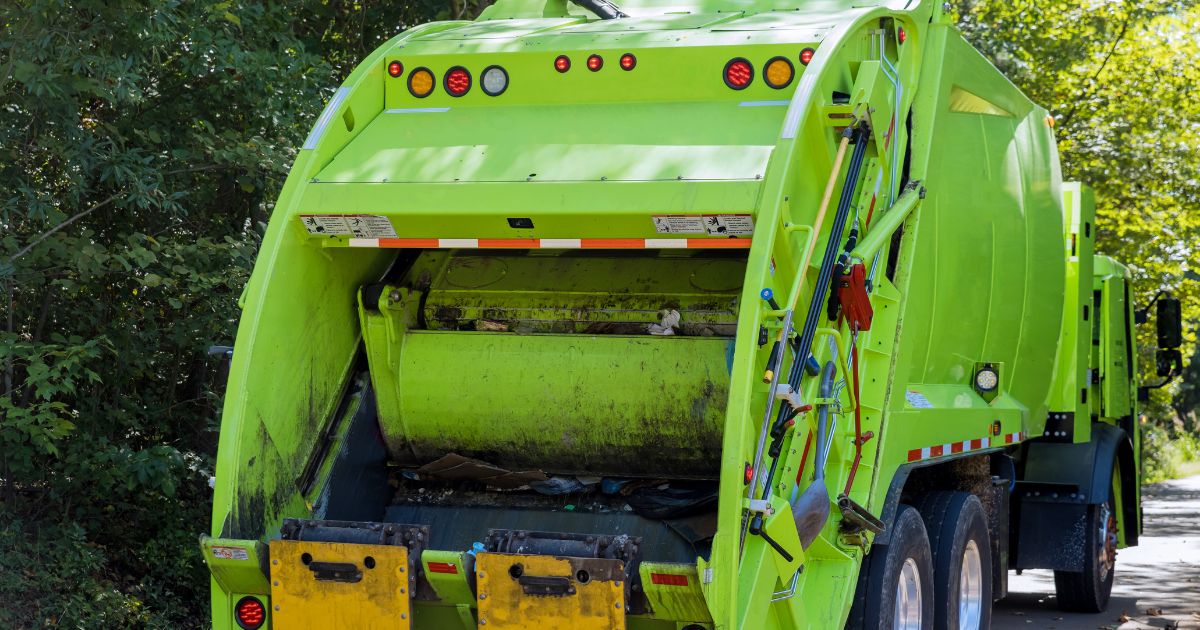
Two Men and a Junk Truck operates branded dump trucks with a professional two-person crew to haul away unwanted items. The franchise provides full-service junk removal for both residential and commercial clients, handling everything from single-item pickups (an old sofa or refrigerator) to entire property cleanouts. Customers are promised a convenient, stress-free experience – the team does all the lifting, loading, and cleanup, then handles proper disposal of the items. This often includes sorting items for donation or recycling to minimize landfill waste, reflecting the brand’s focus on responsible and sustainable junk removal.
Residential Services: Homeowners can call Two Men and a Junk Truck for virtually any non-hazardous junk removal need. Common jobs include picking up old furniture and mattresses, removing broken or unused appliances, hauling away yard debris or storm cleanup materials, garage/basement or estate cleanouts, and disposal of bulky trash that regular garbage service won’t take. The franchise markets itself as a convenient solution for life events like downsizing, decluttering, preparing for a move, or estate clearing. For example, seniors who are downsizing or families clearing out a house can hire TMAJT to quickly empty out unwanted items. The crews will even sweep up the area after removing the junk, leaving the space clean. Pricing is typically based on the volume of junk hauled (e.g. charging by fractions of a truckload) with transparent flat rates for a full truck, half truck, quarter truck, etc., so customers know the cost upfront. This approach is common in the industry and helps customers gauge pricing by how much space their junk will fill in the 15-cubic-yard truck, for instance.
Commercial Services: Two Men and a Junk Truck also serves business and institutional clients. This can range from offices and retail stores to property management companies, schools, and warehouses. For businesses, services include office furniture removal (e.g. disposing of old desks or cubicles), clearing out storage rooms or retail stock rooms, picking up construction or renovation debris, and servicing rental properties with tenant clean-outs. They even handle specialized cleanouts like clearing out foreclosed properties or assisting in disaster cleanup for businesses (removing debris after a flood or fire, for example). The franchise emphasizes that it is fully licensed and insured, and that crews are trained and uniformed professionals – this is a selling point for commercial clients who need reliable service providers that meet insurance requirements. With the backing of a national brand, Two Men and a Junk Truck can appeal to corporate clients or large organizations that prefer to deal with established vendors. The service is pitched as ideal for any business that needs to dispose of large or heavy items and wants the labor taken care of.
Scope and Sustainability: TMAJT prides itself on being a “full-service” junk hauler, meaning the customer simply points to what needs to go, and the crew will “handle furniture pickup, appliance removal, cleanouts, and more” from start to finish. Beyond just hauling items to the dump, the franchise is committed to eco-friendly disposal. They partner with recycling centers, scrap yards, and charities to divert usable items or materials away from landfills. For instance, gently used furniture might be donated to a local charity, metal items might be recycled as scrap, and only the true trash is taken to a disposal facility. According to company information, Two Men and a Truck’s network (including junk removal efforts) diverted nearly 974 tons of junk from landfills in one recent year, reflecting this emphasis on sustainability. This appeals to today’s customers who care about environmental responsibility. Overall, the services offered cover a wide spectrum of junk removal needs – essentially any non-hazardous items that two crew members can carry out and load in the truck, TMAJT will take. They differentiate by offering a trusted, hassle-free service experience (aiming to mirror the positive customer service reputation of the moving side of the business) and by being a one-stop shop: not only will they remove the junk, but they also take care of sorting, donating, recycling and disposal so the client doesn’t have to worry about the aftermath. This comprehensive service model is designed to set them apart from a guy-with-a-pickup independent hauler by providing professionalism and peace of mind.
Franchisee Training & Support
Two Men and a Junk Truck franchisees benefit from the robust support systems honed over decades in the Two Men and a Truck franchise network. The franchisor provides extensive training, technology, and ongoing support to help new owners ramp up and operate efficiently:
- Initial Training: New franchise owners undergo a comprehensive onboarding program that covers all aspects of running the junk removal business. According to the franchise’s materials, training includes both classroom instruction and hands-on learning. Entrepreneur magazine reports a total of about 21.5–32 hours of classroom training for franchisees. During training, owners (and often their operations managers) learn how to use the proprietary systems, how to manage daily operations and logistics, safety protocols for handling heavy items, customer service best practices, and local marketing tactics. They also receive guidance on hiring and training their junk removal crews. This initial training is typically conducted at the franchisor’s headquarters or a designated training facility and may include time in the field at a running location for practical exposure.
- Launch Support: The franchise assigns a dedicated launch support team to each new franchisee. This team essentially acts as a coach/consultant group to guide the owner through the pre-opening and launch phase. They assist with things like truck sourcing and outfitting (helping the franchisee acquire the right truck – often a dump truck or box truck fitted for junk hauling – and ensuring it’s branded and equipped), budgeting and financial planning for the new business, setting up the software systems and office procedures, hiring initial employees (drivers and helpers), and executing a grand opening marketing plan. This hands-on launch process is meant to shorten the learning curve and get the franchisee generating revenue as quickly as possible.
- Technology Systems: TMAJT provides industry-leading tech platforms to its franchisees for running the business. Notably, they have an online consumer booking system and a proprietary field service management software nicknamed “Junk Drawer”. This system handles scheduling jobs, dispatching crews, routing the truck via GPS, invoicing customers, and tracking key metrics. There are also communication systems to manage customer inquiries and leads. Franchisees get access to a centralized call center or support line (in many cases, Two Men and a Truck’s national call center can also handle intake of junk removal customer calls to assist franchisees). Additionally, an intranet platform connects all franchise owners for sharing best practices. The emphasis on technology and streamlined operations is a key selling point – it helps franchisees be efficient (e.g., optimizing routes to save fuel and time) and deliver a consistent customer experience with online booking and quick estimates.
- Ongoing Support & Coaching: After launch, franchisees receive continuous support from the corporate team. Each franchisee is typically assigned a Franchise Business Consultant (FBC) or performance coach who provides regular check-ins on the business’s performance. These consultants, often franchise industry veterans, help analyze financials, set growth goals, and troubleshoot any operational issues with the owner. The franchisor also hosts frequent training updates, webinars or conferences, and provides updates on best practices. According to the company, support includes everything from a toll-free support line for any day-to-day questions, to on-site visits, to a newsletter sharing system-wide news. The goal is to ensure franchisees “are in business for themselves, but not by themselves,” meaning help is always available when needed.
- Marketing & Lead Generation: Two Men and a Junk Truck provides robust marketing support at both the national and local levels. Franchisees contribute to an advertising fund (more on fees below) that goes toward national brand marketing campaigns – this could include digital marketing, pay-per-click ads, SEO efforts to make the brand visible when customers search for junk removal, and potentially national media buys or partnerships. The franchisor’s in-house marketing team also creates localized marketing toolkits for franchisees. These toolkits include ready-made ad templates, social media content, press release templates for a new franchise launch, and guidance on community marketing (e.g., joining local chambers or sponsoring community clean-up events). Franchisees are trained on grassroots marketing as well – such as networking with realtors, property managers, and contractors who can refer business. There is a heavy focus on online review management and customer satisfaction, given the service nature of the business; franchisees are encouraged to leverage the brand’s positive reputation and encourage reviews to build local credibility. The Entrepreneur directory notes that the franchisor provides support with SEO, website development, email marketing, social media, co-op advertising programs, and national/regional advertising – essentially a full suite of marketing support. In practice, a new franchisee might get assistance launching Google Ads in their territory, setting up their local webpage, and guidance on using the trademarked brand materials effectively.
- Operational Tools & Community: Franchisees receive detailed Standard Operating Procedures (SOPs) manuals that outline how to run the business day-to-day – from safety checklists for the truck and crew each morning to how to handle customer inquiries and estimate jobs. The TMAJT system also provides performance dashboards so owners can track metrics like number of jobs, average ticket price, revenue per truck, etc., and benchmark against other franchises. Peer support is encouraged: as part of the Two Men and a Truck family, new junk removal franchisees join an owner network that shares best practices and tips, often through forums or organized conference calls. Given many franchisees are former moving franchise operators, there is a wealth of practical knowledge being shared on topics like labor scheduling, local marketing tactics, and customer service in the home services sector.
Overall, franchisees are well-supported by a franchisor that has decades of experience in a related service business. Everything from initial training to technology to ongoing coaching is designed to ensure the new owner can replicate the model effectively in their territory. This level of support is especially crucial because junk removal – like moving – is an operationally intensive business that involves logistics, labor management, and sales, so having strong systems can make a big difference in profitability and customer satisfaction. Two Men and a Junk Truck’s value proposition to franchisees is that it has “proven systems, robust training, and ongoing support” inherited from its parent brand, which can “simplify daily operations and fuel expansion” for owners. Early franchisees (many of whom have given interviews) often cite the franchisor’s support and the established infrastructure as key reasons they invested in this brand rather than starting an independent junk hauling business.
Startup Costs, Fees & Investment
Starting a Two Men and a Junk Truck franchise requires a moderate initial investment typical for a service franchise involving vehicles. Below is an overview of the initial investment range and ongoing fees, as disclosed in the franchise’s 2023/2024 Franchise Disclosure Document (FDD) and other sources:
- Initial Franchise Fee: $30,000 – $130,000 (one-time). The franchise fee can vary based on territory specifics. At the low end, $30k likely reflects a smaller market or a discounted fee (the company offers 20% off the franchise fee for military veterans as a VetFran incentive). The high end ($130k) might correspond to large metro area territories or perhaps if multiple territories are purchased upfront. This fee grants the franchisee the rights to operate under the Two Men and a Junk Truck brand in a protected territory, initial training, and access to all proprietary systems.
- Total Initial Investment:Approximately $83,210 – $349,275 (range). This includes the franchise fee plus all the startup costs to get the business running. According to Item 7 of the FDD, the low end (~$83K) might be for a smaller “Moderate Market” territory or an owner who already has some required equipment, whereas the high end (~$349K) is likely for a “Metro Market” territory with higher costs. Key components of this investment are:
- Vehicle and Equipment: The purchase or lease of at least one junk removal truck (typically a dump truck or box truck). This is a major cost driver – a new truck outfitted with dumping capability could be $50K–$100K+. The range likely accounts for whether a franchisee buys new, buys used, or leases. Other equipment includes dollies, straps, hand tools, gloves, bins, etc., which are relatively minor compared to the truck cost.
- Insurance and Licenses: Setting up business insurance (general liability, auto insurance for the truck, cargo insurance, workers’ comp) and any local licensing (some locales require hauler permits). These costs can be a few thousands of dollars initially (drawing parallel to similar franchises).
- Office or Storage Space: While the business can be run without a traditional retail location, a franchisee may need a small office or at least a secure lot to park the truck and perhaps a warehouse space to temporarily sort or store items. Some franchisees start by renting a parking space and using a home office, keeping real estate costs low. The FDD likely budgets some funds for an initial lease or facility setup if needed.
- Initial Marketing: The launch marketing expenses (grand opening ads, local promotions) are included – often several thousand dollars.
- Training Travel and Misc.: Travel and lodging for training, initial uniforms for employees, and professional services (legal/accounting to establish the business, etc.). The wide range in total investment reflects variations in truck costs and market expenses (e.g., higher labor or insurance costs in some cities).
- Royalty Fee: 7% of gross revenues (ongoing). This is the fee paid to the franchisor on sales, typically collected weekly or monthly. A 7% royalty is in line with many service franchises. In return, franchisees get continuous rights to the brand, ongoing support, and system development. (Notably, franchisees with the sister brand Two Men and a Truck pay around 6% royalty for moving services; 7% for junk suggests a comparable structure.)
- Advertising/Marketing Fee: 7% of gross revenues (ongoing). According to Entrepreneur’s breakdown, TMAJT also charges a 7% Ad Royalty Fee. This is relatively high for a marketing fund – many franchises charge ~2% for national ads – so it’s worth clarifying. It’s possible that this 7% encompasses both national ad fund contributions and required local advertising spending. For example, the franchisor might require franchisees to spend up to 5% of sales on local marketing (e.g., local ads, community sponsorships) and contribute 2% to a national fund. Combined, that would be ~7% dedicated to marketing. In any case, franchisees should expect to allocate a significant portion of revenue to continually advertising the service in their territory, which aligns with the need to constantly find new junk removal jobs (since repeat business is less frequent, as discussed later). The FDD’s Item 6 would detail this breakdown.
- Other Fees: There may be additional ongoing fees typically found in franchise systems, such as a technology fee or software license fee (for using the “Junk Drawer” system, etc.), which might be a flat monthly charge. Franchisees also eventually pay a renewal fee if they renew after the 10-year term (often a percentage of the then-current franchise fee, perhaps 10-20%). The term of the franchise agreement is 10 years, with the right to renew for a subsequent term (likely at a reduced fee). Entrepreneur’s profile indicates the franchise can be financed: TMAJT offers in-house financing for the franchise fee, and has relationships with third-party lenders to help finance equipment, trucks, or other startup costs. This can ease the initial capital burden for new owners.
- Financial Requirements: The franchisor typically looks for candidates with a minimum financial capability. BizBuySell lists the net worth required at $160,000 and liquid capital (cash) of $80,000. These ensure the franchisee can afford the investment and have some working capital to sustain operations until breakeven. These figures align with the investment range – you need about $80K cash to cover the low end, and financing or additional assets for anything beyond.
In summary, opening a Two Men and a Junk Truck franchise will likely cost low-to-mid six figures in total. The need to acquire trucks and cover initial operating expenses (payroll, fuel, dump fees, etc.) for the first few months is reflected in the higher end of the range. By comparison, the initial investment is similar to other junk removal franchises (for example, 1-800-GOT-JUNK? cites ~$150K-$250K investment and College Hunks ~$95K-$200K). The ongoing royalty + marketing fees (7% + 7%) mean franchisees are giving 14% of sales to the franchisor and brand development – a notable amount, but presumably this fuels the marketing engine necessary to drive leads in a new brand. The franchise does offer financing options and veteran discounts to attract qualified owners. From an investor’s standpoint, one should weigh these costs against the potential revenue and profits (see next section) in the junk removal business model.
Financial Performance and Earnings Potential
Because Two Men and a Junk Truck is a very new franchise brand, detailed financial performance data is somewhat limited in the public domain. As of its initial launch phase, the franchisor did not have a long history of franchisee operations to share average financials, and the first Franchise Disclosure Document (FDD) may not have contained an Item 19 financial performance representation (or contained only limited data). An FAQ on the TMAJT franchising site in 2023 hinted that a formal Item 19 was “soon-to-be-published” as the system grew and could provide reliable numbers. This suggests that in the first year, they were collecting data to eventually share with candidates. By now (2025), it’s possible that the franchisor has released some performance figures to prospective franchisees under NDA, or updated the FDD with results from the initial corporate-owned operations or first franchises.
Known Benchmarks: Although exact earnings for TMAJT franchises aren’t published in sources we accessed, we can glean some insights and comparisons:
- The franchise’s business model is similar to moving and other junk removal franchises, which often have high gross revenues per unit but also significant operational costs. Competitor data: For example, 1-800-GOT-JUNK? (the largest junk removal franchise) reported average annual sales per franchise of about $423,000 (median) with top operators exceeding $1 million per year according to franchisechatter.com. College Hunks Hauling Junk (which does junk and moving) had an average franchisee revenue around $1.25 million in 2019, with top quartile near $2.48M. These established brands indicate the revenue potential is substantial if volume is high.
- Two Men and a Junk Truck’s leadership has implied that franchisees can build a million-dollar business over time. In their marketing, they highlight strong margins and a scalable model. The fact that they grew to 75 locations in 2 years indicates franchisees see enough revenue opportunity to invest. If we assume even a modest ramp-up, a franchise could potentially generate a few hundred thousand dollars in its first year of operation (depending on population and marketing) and then scale upwards as additional trucks and crews are added. Junk removal jobs can range from $100 for a single item pick-up to $700–$800 for a full truckload, so doing just 2–3 full loads a day can already yield ~$500k+ in annual gross sales (e.g., $750 per job * 2 jobs/day * 5 days/week * 50 weeks ≈ $375k). Top franchises doing multiple trucks worth of jobs per day can reach seven figures in revenue.
- Item 19 Expectations: Once published, Item 19 might include data from any company-operated junk removal locations or the results of franchisees who have been operating for a full year. Since many initial TMAJT franchisees were existing Two Men and a Truck owners, they might have had a head start in operations. If, for instance, a franchisee ran junk removal for a year, they could report their total jobs, revenue, etc. We did not find a public disclosure of these figures yet. However, anecdotal success stories show, for example, one franchise owner launched in January and by the year’s end had done over 1,000 junk removal jobs, or diverted hundreds of tons of waste, etc., which implies robust activity (though not directly translating to profit figures).
- Profitability Factors: Junk removal can be quite profitable if run efficiently, but margins depend on managing labor and disposal fees. Typically, direct costs include labor (2 crew members’ wages), fuel and truck maintenance, and dump fees (landfill charges by weight or volume, which can be significant). On the other hand, there’s little cost of goods sold – you’re selling a service and labor. Well-run operations can see profit margins in the 15%–25% range of revenue after royalties, though this can vary widely. Early on, franchisees might operate one truck and do much of the work themselves as owner-operators to maximize profit. As they grow and hire crews, their role becomes more managerial. Two Men and a Junk Truck emphasizes “strong margins” and an “operationally simple, scalable” model, suggesting that with their systems (route optimization, efficient truck utilization, etc.), owners can achieve healthy returns.
- Franchisee Earnings Example: While not publicly published, we can infer from the parent company’s experience: Two Men and a Truck (moving) franchises often surpass $1 million in annual sales with decent profitability. Junk removal is a bit more transactional, but some moving franchisees who added junk trucks likely saw an immediate revenue boost by capturing business from existing moving customers. The franchisor’s confidence in the model is high – they tout that franchisees can accelerate to profitability thanks to the brand recognition and support. Entrepreneur’s franchise listing did not rank TMAJT in the Franchise 500 (too new to have a ranking) and thus no average sales were listed there. However, on the Assett franchise blog (the cleaning franchise we’ll compare later), it was noted that TMAJT’s parent company had diverted 974 tons of junk and had 62 franchises quickly, implying a fast ramp-up in business volume.
In absence of a concrete Item 19 figure to cite, prospective franchisees should conduct due diligence by speaking with existing Two Men and a Junk Truck owners. Those conversations (allowed under Item 20 of the FDD) would give real-world insight into revenues and expenses. Given the brand’s newness, many franchisees might still be in growth mode and reinvesting in marketing or additional trucks. That said, the junk removal industry as a whole has strong unit economics, with some of the top franchises reporting average gross revenues around $600K–$1M per unit and healthy EBITDA margins for owners who scale up crews.
Bottom Line: Two Men and a Junk Truck franchisees can likely expect to build up to high six-figure revenues within a couple of years if they aggressively market and capitalize on the Two Men and a Truck customer base. The franchisor will probably release official performance data once a sufficient sample of franchises have matured. Until then, the draw for franchisees is the combination of a booming demand (junk removal is in vogue as people declutter) and the backing of a franchisor that knows how to drive business. It’s reasonable to expect that if a franchise follows the system and the market demand holds, they could achieve similar performance to other leading junk franchises – potentially $500K+ in annual sales per truck operation, with opportunities to grow beyond $1M by adding trucks and crews. As we’ll discuss, unlike commercial cleaning, this revenue tends to come in one-time jobs rather than recurring contracts, which influences how the business grows and sustains its income.
Customer Base & Market Positioning
Two Men and a Junk Truck serves a broad customer base that includes both residential and commercial clients, which is a key strength of its model. The service is essentially needed by anyone with unwanted clutter or debris – giving the franchise a wide target market but also requiring smart marketing to each segment.
- Residential Customers: A large portion of TMAJT’s customers are homeowners or renters needing to get rid of junk. This includes individuals clearing out basements, attics, or garages, people preparing to move houses (or just moved in and have boxes/trash), families handling estates after a relative passes, DIY renovators with construction debris, or even just spring cleaners with miscellaneous junk. There’s also a seasonal student market in college towns (students moving out of dorms/apartments leaving furniture behind). Two Men and a Junk Truck capitalizes on the trust the Two Men and a Truck name has with homeowners – those who’ve hired them for moving may readily hire them for hauling junk. Homeowners appreciate that the service is turn-key: the crew does the heavy lifting and will dispose of items properly, which is especially valuable for large items like appliances or for older customers who physically cannot haul junk themselves. The brand’s professional image (uniformed, courteous movers) appeals to residential clients who might be uneasy about letting “some random hauler” onto their property. As noted in a franchise profile, the service “delivers a stress-free experience for homeowners” by being reliable and efficient. Residential jobs can be small (one item) or large (whole house cleanout), so franchisees must be flexible and responsive.
- Commercial Customers: TMAJT actively markets to businesses and institutional clients as well. These include office buildings (removing old office furniture, electronics recycling, clearing out storage), retail stores (disposing of old stock, fixtures, or packaging waste), property managers (cleaning out apartments between tenants, or clearing junk from evicted units), contractors and real estate agents (post-construction debris removal, or clearing a property before sale/showing), schools and universities (end-of-year dorm cleanouts, or disposing of old equipment), and even municipal clients (helping at community clean-up events, etc.). Because Two Men and a Junk Truck is a brand with a national presence, it can instill confidence in commercial clients who require insurance, invoices, and professionalism. The franchise highlights that it generates both B2C and B2B business, including referrals and repeat business from commercial accounts. Commercial jobs often involve recurring needs on an as-needed basis – for instance, a property management company might call every time they have a cleanout, effectively becoming a repeat client even if not on a fixed schedule.
- Market Position: Two Men and a Junk Truck positions itself as a “reliable, professional service” in a field that has historically been fragmented between big players and local operators. They aim to bring the same level of customer service and trust that made their moving brand successful into junk removal. The brand’s messaging often emphasizes empathetic, friendly service – understanding that getting rid of possessions can be emotional for customers – combined with responsible disposal (eco-friendly approach). With its ties to a moving company, TMAJT can also capture unique opportunities: for example, when a customer hires Two Men and a Truck to move, the franchisee can cross-sell junk removal for items the customer isn’t taking with them. This integrated approach can provide convenience (one call to handle both moving and junk hauling).
- Geographic and Demographic Reach: By offering franchising in nearly all U.S. states (and even Canada), the company shows its market is essentially everywhere. The ideal territories are likely those with a healthy mix of suburban homeowners and local businesses – pretty much any mid-sized city or larger. As of 2025, the franchise is operating in 23 states, including locations from Florida to Wisconsin to California. On social media, the brand’s official page notes they are serving 23 states nationwide as of late 2025. The demographic tends to skew toward middle and upper-income customers for residential (people who can afford to pay for convenience), as well as small-to-medium businesses for commercial. However, junk removal also has segments like hoarding cleanup or helping seniors, which require a sensitive touch – the franchise’s training and values (it touts core values and customer care in line with its moving heritage) help franchisees handle these situations professionally.
In essence, Two Men and a Junk Truck is trying to be the go-to name for junk removal just as Two Men and a Truck is for local moving. Their customer base is broad, but the common thread is anyone who values convenience, speed, and trustworthiness when getting rid of junk. By serving both residential and commercial markets, franchisees have multiple streams of business. Residential jobs may come from online ads and word-of-mouth, whereas commercial jobs often come from networking and ongoing relationships. The company’s dual focus on home and business removal means franchisees aren’t reliant on a single customer type. This is advantageous because, for example, if home demand dips in winter, perhaps some commercial clients (like retailers doing year-end clear outs) might fill the gap. The branding (“Two Men…”) itself resonates as familiar and approachable in both contexts. Going forward, as more locations open, the national accounts or partnerships could emerge (like agreements with national property management chains or retail chains) – something a big brand can pursue, giving local franchisees even more business opportunities.
Junk Removal Industry: Pros & Cons
Operating a junk removal franchise like Two Men and a Junk Truck comes with its own set of advantages and challenges. Understanding these is important, especially as we later compare this model to commercial cleaning franchises. Below is an overview of the pros of the junk removal business and the cons/risks that franchisees in this industry face:
Advantages of Junk Removal Franchises
- High Demand and Growing Market: Junk removal has become a mainstream service in high demand. With consumer trends toward decluttering (think Marie Kondo effect) and the ease of app-based booking, more people are willing to pay for someone to haul away their unwanted items. Both residential and commercial sectors produce a steady stream of junk (old furniture, equipment, waste) that needs removal. The industry has proven growth – for instance, 1-800-GOT-JUNK? grew to 200+ franchises and captures an estimated 22% of the junk removal market. Two Men and a Junk Truck entered this market seeing plenty of room to grow, especially leveraging moving-related junk needs. As long as people accumulate things, there will be demand for hauling services.
- Relatively Simple Operations: Compared to many businesses, junk removal operations are straightforward – there’s no complex production or skilled trade involved. A franchise typically needs a small team (two people per truck), a truck, and a place to dump items. No brick-and-mortar storefront is required; many franchises operate from a home office and use a cell phone and scheduling software to coordinate jobs. This keeps overhead lower than, say, a retail franchise. The service can be started relatively quickly: once you have a truck and the necessary permits, you can begin taking jobs. TMAJT’s model is built on “operational simplicity”, aiming for strong margins through efficient processes.
- Quick Turnaround on Cash Flow: Junk removal is typically a cash (or credit card) upfront business – customers usually pay at the time of service (often once their junk is loaded, before the truck drives off). This means franchisees don’t usually deal with long billing cycles or accounts receivable (except some commercial accounts). It’s positive for cash flow; you earn money from each job daily. There’s also the occasional bonus of finding resalable items – some junk haulers offset costs by salvaging and selling items of value (though this is more common for independent operators; franchises might have rules about this). Additionally, disposal fees are often charged by weight or load, so franchisees can manage dump costs by recycling items (which TMAJT encourages via donations and partnerships).
- Scalability by Adding Trucks: A junk removal business can scale in a somewhat linear but effective way – by adding more trucks and crews, you can do more jobs and increase revenue. There’s no strict limit to one territory’s revenue; a franchisee can operate multiple trucks in one large area if demand supports it. Many junk franchises start with one truck and end up with 3-5 trucks as they grow, each truck potentially bringing in a few hundred thousand dollars per year in revenue. Scaling requires hiring and management, but the model is replicable: each additional truck is like adding another “unit” of revenue generation. Two Men and a Junk Truck explicitly notes their “scalable model” and franchisees expanding further as demand grows.
- Tangible Impact and Satisfaction: On a less financial note, junk removal can be quite rewarding – you provide instant gratification to customers (their space is cleared and clean in a matter of hours). Franchise owners often mention the satisfaction in helping people dispose of clutter responsibly and seeing relieved, happy customers. There’s also community impact: franchises often help donate usable goods and support local charities by delivering furniture or items to those in need. The environmental aspect is a pro as well – diverting waste through recycling/reuse is something owners can take pride in, aligning with increasing societal focus on sustainability.
Challenges and Risks in Junk Removal
- One-Time Jobs (Lack of Recurring Revenue): Perhaps the biggest drawback of junk removal is that it’s typically a one-off, episodic service. The same customer might not need you again for a long time, if ever. Unlike an office cleaning client who pays you every month, a junk removal client calls when they have junk and then the job is done. This means franchisees must continually market and acquire new customers to keep revenue flowing. There is some repeat business and referrals, but primarily it’s a transactional model. As one comparison put it, businesses like restoration or junk hauling are “reactive and project-based” – you’re often waiting for a customer event or decision to trigger a job. This can result in uneven demand and makes forecasting a bit harder. In slow periods, you can’t rely on a base of recurring contracts to cover costs – you have to hustle for the next job.
- Seasonality and Demand Swings: Junk removal demand can be seasonal and weather-dependent. For many regions, spring and summer are peak times (spring cleaning, moving season, good weather for clearing out, yard debris removal). The fall and winter might slow down, especially in colder climates where people aren’t keen on cleaning out a garage in freezing temperatures. There are some counter-balancing factors (e.g., in November/December some people declutter before holidays, and January brings New Year clean-outs), but generally the volume of jobs can fluctuate with seasons. Additionally, big local events like a hurricane (creating debris) can spike demand suddenly. A franchise must manage staffing for these ebbs and flows – perhaps hiring temporary helpers in summer, etc. The business is also somewhat day-of-week sensitive: demand from homeowners peaks on weekends, whereas businesses might schedule on weekdays. Adapting to these patterns is an operational challenge.
- Physical and Operational Demands: Running a junk removal operation is labor-intensive and operationally involved. While the franchise owner may not be on every truck, they have to recruit, train, and retain employees who can do heavy physical work safely. Lifting couches, hauling refrigerators, carrying things up from basements – the job is tough. This can lead to high employee turnover (common in moving and hauling industries) and potential for injuries if safety isn’t top-notch. As franchisor materials highlight, having proper safety procedures and training is crucial. There are also operational burdens like vehicle maintenance (trucks require regular maintenance and repairs – if your truck is down, your business halts), managing schedules/routes to maximize productivity, and handling disposal logistics (identifying the right dump or recycling centers and the fees/policies of each). Compared to a simpler home-based business, there are more “moving parts” – literally and figuratively – to coordinate daily.
- Equipment and Disposal Costs: A junk removal franchise faces significant equipment costs and ongoing expenses. The upfront cost of trucks is high, and they depreciate. Fuel prices can impact margins since the trucks often drive many miles per day between jobs and the landfill. Maintenance costs (tires, oil, engine wear from heavy loads) need to be budgeted. Dump fees can also erode profit – landfills charge either by weight (e.g. $x per ton) or by volume/load. If a franchise hauls a lot of dense, heavy material (like construction debris), the fees could be substantial. There’s also the need for insurance – commercial auto insurance for trucks and liability insurance for crew on customer property is not cheap, given the risk of accidents or injuries. All these costs mean that although revenues per job can be high, the net margins must account for these overheads. If not managed well (for example, if trucks aren’t routed efficiently or go out with half-loads), profitability can suffer. Also, any downtime (slow days, or truck in repair) directly hits revenue, since the business output is tied to truck availability.
- Competitive Pressure: The junk hauling space, while growing, is highly competitive. Franchisees not only compete with other franchises (like 1-800-GOT-JUNK? which may be well-established in some cities, or local College Hunks franchises), but also with numerous independent operators. It’s relatively easy for someone with a pickup truck or trailer to offer basic junk hauling on Craigslist or Facebook Marketplace, often at lower prices because they have little overhead. These “mom-and-pop” or side-gig haulers can undercut pricing, especially for simple jobs, which can make lead conversion a challenge on price-sensitive customers. The flip side is that the franchise brand can justify premium pricing with professionalism and full service, but not all customers value that. Thus, franchisees must differentiate on reliability, insurance, and trust (for instance, businesses and affluent homeowners may prefer a licensed, insured company like TMAJT, even if it costs more, rather than a random hauler). Nonetheless, generating leads often involves paying for Google Ads or other marketing to stand out from competitors, which is a continual expense.
- Emotional/Episodic Buying Cycles: Junk removal is often an “emotional” or situational purchase for customers. People call when a pain point arises – e.g., a garage is overstuffed and they snap and want it gone, or a loved one passed and they need an estate cleaned out, or a business is relocating and has to clear junk by a deadline. These scenarios mean customers might be stressed, emotional, or in a hurry. Franchisees have to be prepared to handle urgent requests (“I need this out by tomorrow”) and to provide good customer service to sometimes emotional clients (for instance, someone cleaning out a deceased parent’s belongings – sensitivity is required). The episodic nature also implies you can’t easily predict when the phone will ring – it could be feast or famine. As one analysis of a similar industry (restoration) noted, these businesses depend on unpredictable events and client needs, as opposed to steady contract work. It also mentioned that clients in such situations may have “emotional buying cycles” and urgent needs, making every job feel urgent but also sometimes stressful. For the owner, this can translate to an irregular schedule – you might get evening or weekend calls if you advertise 24/7 availability. Many junk franchises do offer extended hours or even 7-day service to capture jobs when customers are available. This can strain work-life balance for a small operation until it grows enough to have on-call staff.
In summary, the junk removal franchise industry offers a compelling business opportunity with high customer demand, but it requires continuous effort in sales and operations to be successful. A Two Men and a Junk Truck franchisee will enjoy the benefit of a strong brand name and support system to mitigate some challenges (for example, help with marketing to constantly bring in new leads, training to avoid injuries, and systems to optimize routes and costs). However, the fundamentals of the industry remain: it’s an on-demand service business with fewer recurring revenues and significant operational execution needed. Any potential franchise investor should weigh these pros and cons against their personal goals and compare them to other franchise options – such as commercial cleaning – which we’ll do next.
Commercial Cleaning vs. Junk Removal: Comparative Insights
To put the Two Men and a Junk Truck opportunity in perspective, it’s useful to compare it to the commercial cleaning franchise industry. The user specifically is interested in Assett Franchise – a commercial cleaning business – so we will highlight how a B2B cleaning model contrasts with the junk removal model. Commercial cleaning (janitorial services for offices and facilities) has very different dynamics, generally favoring recurring revenue and resilience, while junk removal offers high-ticket jobs but on a one-time basis. Below we outline key comparative points:
Strengths of Commercial Cleaning (B2B Recurring Model)
- Recurring Revenue & Contract-Based Clients: Commercial cleaning is typically built on long-term contracts with clients who need service daily, weekly, or monthly. This means franchisees enjoy predictable, steady income from repeat business. For example, an Assett franchise focuses on “landing high-value recurring contracts (such as entire office buildings or medical facilities that pay tens of thousands per year each)”. Each client (an office, school, etc.) might sign an annual contract for cleaning services, providing reliable cash flow. In contrast to junk removal’s one-and-done jobs, cleaning contracts automatically renew or continue, so an owner isn’t starting from zero each month. Over time, a cleaning franchise can accumulate a base of accounts that collectively provide a stable revenue floor.
- Semi-Absentee Ownership Potential: The structure of commercial cleaning often allows the owner to work “on” the business rather than “in” the business, especially after initial ramp-up. Cleaning is done after-hours by crews, and an owner can hire a supervisor or manager to oversee nightly operations. Many commercial cleaning franchises tout that they can be run in a semi-absentee or executive capacity – meaning the owner doesn’t need to be physically present at each job. Assett Franchise, for instance, is designed to be run semi-absentee, with as little as ~5 hours per week of owner time once systems are in place. They emphasize the franchisee’s role is to manage client relationships and growth, not to do the cleaning. This contrasts with junk removal, where at least initially an owner might find themselves riding in the truck or actively managing every job’s logistics. Cleaning franchises like Assett position their model as one where the owner can keep a day job or focus on business development while teams handle the service delivery. This “executive model” can be very appealing for entrepreneurs seeking more freedom. In fact, Assett advertises that its owners “get to own a true business with earning potential beyond $1M in gross sales, and they’re not supposed to be the one doing the cleaning” as stated in bizbuysell.com – highlighting how the owner’s role is managerial and the business can run with limited time input once staff and contracts are in place.
- Recession-Resistant & Stable Demand: Cleaning services for businesses are often considered essential and non-discretionary – offices, hospitals, schools must be cleaned regularly regardless of economic ups and downs. Thus, the industry is known to be recession-resistant. Even during economic downturns or events like the COVID-19 pandemic, commercial cleaning was in steady (even heightened) demand for health and sanitation reasons. Assett’s materials note that the commercial cleaning industry is a massive $100+ billion market that remained steady through recessions and even saw business growth through 2020’s pandemic. Because clients usually budget for cleaning as an ongoing expense, franchisees aren’t as vulnerable to consumers cutting out the service – a stark difference from junk removal, which is a discretionary, “nice to have” service when someone has extra cash or need. In tough times, businesses might even reduce their own staff but still outsource cleaning, or they may shop for cost-effective yet reliable cleaners (favoring established franchise brands). This stability can make revenues more predictable and planning easier for a cleaning franchise.
- High Revenue Potential with B2B Scale: While each cleaning contract might not be as large as a single big junk job, the cumulative effect can lead to very high annual revenues. A commercial cleaning franchise can scale by signing multiple large accounts. Assett franchisees, for example, aim for “big commercial contracts (whole office buildings, medical centers, etc.)” and build full teams to service them. The franchise explicitly promotes a “Proven $1,000,000+ Cleaning Franchise Model”. Indeed, some of the top commercial cleaning franchise owners (in networks like Jan-Pro, Coverall, etc.) gross well over $1M by having dozens of contracts across a metro area. Importantly, this revenue is diversified – coming from many clients – not dependent on daily ad spend to win a new customer. As long as service quality is maintained, contracts often renew yearly, creating a compounding effect on revenue as new contracts are added. The B2B nature also means each client’s value is high (one contract could be $20k, $50k, $100k per year), so landing a few key clients can make a franchise very successful.
- Lower Asset/Equipment Requirements: Commercial cleaning typically requires only basic equipment and supplies (vacuum cleaners, mops, cleaning solutions) which are inexpensive. There’s no need for heavy vehicles or machinery in most cases – many cleaning franchises can even be run without any branded vehicle, or just a simple van for supply transport. Overhead is low: no storefront, maybe a small storage unit for supplies. Assett’s comparison notes “no expensive inventory of restoration equipment is required, and most operations are home- or small-office-based”. Start-up costs for cleaning franchises are often on the lower end of franchising. For instance, Coverall’s initial investment can be under $20k for a small package. Assett’s model is more of an “executive” franchise with a larger territory and is around $50k+ franchise fee, but still the ongoing costs (aside from labor) are minimal. This means less financial risk and fewer capital expenses for maintenance or replacement. Profit margins can therefore be strong; aside from labor and cleaning supplies (and franchise fees), there are not many variable costs. This also aids scalability: to grow, one mainly adds more labor (cleaning crews) which can be relatively easily scaled by hiring part-time cleaners as new contracts come in, rather than having to buy another expensive truck or equipment.
- Controlled Scheduling & Work Hours: Cleaning is usually done on a regular schedule, often after normal business hours (nightly cleaning, weekend deep cleaning, etc.). This means the business schedule is more controlled and predictable. Franchise owners can organize crews to clean at set times and know in advance how many staff are needed each night. It’s rare to have emergency calls in cleaning (except perhaps a spill or urgent extra service, but not like a tree fell on a house). Comparatively, junk removal often requires being on standby for same-day or next-day jobs to beat competitors to a customer – a more ad-hoc schedule. The routine nature of cleaning can also allow an owner to plan their own time (e.g., do sales during the day, let crews work at night). Additionally, absentee or semi-absentee operation is feasible: some franchisees keep their day job and manage the cleaning business on the side, using supervisors to handle nightly operations. Assett specifically was “crafted for career” individuals, implying it’s structured so that you can run it without it consuming all your time.
Overall, commercial cleaning franchises offer strengths in stability, scalability, and owner lifestyle flexibility. As one franchise industry article summarized: “Every office building and facility needs cleaning on a regular schedule – cleaning services are truly essential… considered one of the most recession-resistant businesses. Cleaning companies typically secure long-term contracts, generating predictable, recurring revenue… overhead is relatively low… a commercial cleaning franchise scales by adding accounts, not by buying heavy equipment”. This nicely encapsulates why cleaning is often lauded as a solid, if not flashy, business.
Challenges for Junk Removal (vs. Cleaning)
When comparing junk removal to the above strengths of cleaning, several weaknesses or risks stand out for the junk model:
- Transactional, Not Recurring: As discussed, junk removal is largely transaction-based. You might service 100 customers in a month and have to find 100 more next month. There are no guarantees of repeat business. This contrasts sharply with cleaning where you might have, say, 20 clients that provide 100 jobs a month consistently. Junk removal’s revenue can thus be more volatile and heavily tied to marketing efficacy. It often requires continual advertising spend to keep leads coming (e.g., Google Ads, junk listing sites) whereas a cleaning franchise might rely more on B2B sales and referrals once established. The lack of inherent recurring revenue means an economic downturn or a cut in consumer spending could quickly impact volumes – people can delay that basement clean-out indefinitely if budgets tighten, whereas an office can’t just stop being cleaned. This makes junk removal somewhat less recession-proof. People declutter more when they feel financially comfortable or when moving; in recessions, they may DIY or postpone. (One could argue businesses might call junk haulers to clean out space when downsizing in a recession, but it’s not a consistent flow.)
- Episodic Demand & Unpredictability: Junk removal demand is often event-driven and irregular. You can’t easily forecast how many jobs will come in a given week. It depends on whether people decide “this is the weekend I clean out the garage” or if a landlord suddenly needs a clear-out. This unpredictability can complicate staffing – you might have idle crew on payroll in slow weeks and then be overwhelmed in busy weeks. Commercial cleaning, by contrast, has set schedules (you know exactly how many hours of cleaning need to be staffed each week). Junk removal can have an element of “feast or famine.” The Assett franchise blog analogized this in a related context: “restoration (project-based service) is reactive and project-based – you must wait for accidents or disasters… Revenue can spike after storms, but can be slow at other times… [It’s] episodic and hands-on”. Replace “restoration” with “junk removal” and the sentiment holds – you’re often waiting for clients to have junk. This can also impact work-life balance: a junk removal franchise might feel compelled to operate on short notice and weekends to capture jobs, whereas cleaning crews work on a predictable nightly schedule. Indeed, junk jobs often come with a sense of urgency (“I need this stuff gone by tomorrow because closing is next week,” etc.), forcing the business to be highly responsive and flexible.
- High Customer Acquisition Cost: Winning junk removal customers can be expensive on a per-job basis. Digital advertising for “junk removal [city]” keywords is competitive and pricey (because each job is worth a few hundred dollars, many companies bid high). A franchise might spend significant money on marketing each month to generate leads. Since there’s not much repeat business, that spend is a continuous need. In commercial cleaning, you might network or use a salesforce to land a few big accounts, and then you’re set for a year or more with those. In junk, you’re essentially resetting your sales funnel continuously. Also, customers often shop around for junk services (calling 2-3 companies for quotes). If TMAJT’s prices are higher (due to overhead and professional service) than a local independent, the franchisee has to sell the value hard. This dynamic can squeeze margins or require offering discounts to win jobs. It’s a hustle-intensive business in terms of sales.
- Labor and Physicality: Both industries have labor challenges, but junk removal requires strong, able-bodied general laborers who can handle very strenuous tasks and also interact well with customers (since they are on-site at people’s homes). The labor pool for this – typically young, fit workers – overlaps with moving company labor, which is known for high turnover. It can be difficult to find reliable crew willing to do dirty, heavy work long term for relatively moderate pay. There’s also more risk of injury or accident (strained backs, smashed fingers, etc.) moving random junk than, say, a janitorial crew cleaning offices (which is lighter duty). Franchisees must invest in good hiring and training practices to keep a solid team, or else service quality and capacity will suffer. Employee turnover is a notable issue – whereas a cleaning franchise might attract a stable team of cleaners who stick around, junk hauling crew might see the job as temporary or seasonal. The Assett franchise commentary highlights that hiring is the #1 challenge in service businesses, and they built an automated hiring system to address it. Junk removal franchises will similarly need strong hiring pipelines, but they also face the added challenge that their work is arguably less pleasant (hauling junk vs. cleaning an office) which could affect retention.
- Equipment & Fixed Costs: Junk removal has higher fixed costs (trucks, fuel, maintenance) that you must pay regardless of how many jobs come in, whereas a cleaning business’s costs are more variable (if a contract ends, you just have fewer labor hours to pay). If a junk truck isn’t doing enough jobs, it’s still costing insurance, payments, etc. The margin for error can be thinner if volume targets aren’t met – you have to cover those fixed costs. Cleaning can start small (one person can clean a small account with minimal gear, and you scale up costs as you get accounts). Junk removal kind of requires a “critical mass” of jobs to justify the truck and crew expense each day. Additionally, the resale/trade-in value of specialized junk trucks might be lower than expected, so it’s capital tied up. Disposal fees are another cost that, if misestimated, can hurt profitability (e.g., a customer’s junk was heavier than expected, so dump fees eat your profit on that job). These aspects mean the owner must keep a close eye on route density (so you’re not driving 30 miles between jobs) and on filling the truck as much as possible on each run.
- Market Saturation and Brand Newness: Junk removal is a newer franchise sector comparatively. Two Men and a Junk Truck is itself new and while that brings opportunity, it also means the brand doesn’t yet have the widespread consumer awareness that “Two Men and a Truck” does in moving or that, say, Coverall or Jan-Pro might have in cleaning. Commercial cleaning franchises often benefit from decades of brand history or referrals in B2B circles. TMAJT franchisees have to educate consumers that this service exists and that this new brand is an option. The brand is working on that with national marketing, but early franchisees are essentially trailblazers in their markets. There’s a bit more risk with a new brand (less proven market performance, FDD data still sparse) versus an established cleaning franchisor that can show you average franchisee earnings from, say, 100 units over 5+ years. That said, being first can also mean capturing untapped market share if done well.
In a direct head-to-head sense, one could say: junk removal is more of a “hunt each day” business, whereas commercial cleaning is a “farm long-term relationships” business. An insightful comparison from an industry source put it this way: commercial cleaning offers steady, routine demand, fixed monthly billing, and semi-absentee operation, whereas [project-based services] are more episodic and hands-on. The cleaning industry advantages were listed as “stable $100B+ B2B market; contracts that run year-round; essential service; predictable recurring revenue; low startup overhead; largely insulated from recessions; scalability via more contracts rather than costly assets.”. On the flip side, challenges of a project-based model include “business depends on unpredictable events rather than regular schedules; heavier equipment needs; competitive field of local providers; clients typically in emergency mode with emotional cycles.”. Junk removal isn’t emergency-based like restoration, but it shares many of these traits – unpredictable, equipment-heavy, fragmented competition, and somewhat seasonal/emotional demand.
Conclusion of Comparison
For an entrepreneur evaluating Two Men and a Junk Truck vs. a commercial cleaning franchise like Assett, the decision comes down to business model preference and personal fit. Junk removal can offer higher short-term revenue per job and fast ramp-up, and it leverages a strong consumer brand with Two Men and a Truck – but it requires aggressive marketing and hands-on coordination. Commercial cleaning offers a more stable, long-term growth path with recurring B2B clients, and franchises like Assett position themselves as scalable to seven figures with a semi-absentee approach. Cleaning’s strengths include being recession-resilient and having multiple streams of recurring income, as well as typically lower starting costs and easier scalability by adding contracts instead of capital equipment.
On the other hand, junk removal leverages a trend of outsourcing labor for inconvenient tasks and can tap into both residential and commercial demand without needing the sales process of securing contracts. Some entrepreneurs might prefer the quick turnaround and variety of junk removal jobs over the routine of nightly cleaning. Also, junk removal can have high profit on individual jobs (some big cleanouts can be very lucrative) and doesn’t involve managing dozens of picky clients – you service a customer and move on, whereas cleaning requires keeping clients happy continuously.
From an investment perspective, however, many franchise coaches would point out the allure of compounding, contract-based revenue (cleaning) versus the “start from zero each month” nature of job-based revenue (junk). Assett Franchise underscores this by highlighting its recurring revenue model and even providing average unit revenues above $1.5M in 2024 for its franchisees, achieved through building a client base. Two Men and a Junk Truck, still new, doesn’t yet have such track records to show, but its alignment with a proven brand suggests it could carve out a dominant share in its segment. Ultimately, an investor should consider their own management style: If you enjoy B2B relationship-building, sales, and a more predictable operation that you can scale and maybe even step back from (semi-absentee) – commercial cleaning might play to those strengths. If you prefer a more active, consumer-facing business that keeps you on your toes with varied projects and you’re aligned with Two Men and a Truck’s moving empire – junk removal could be an exciting growth opportunity.
Both industries can be lucrative and are service-based with relatively low costs of goods, but commercial cleaning shines in recurring B2B stability and passive ownership potential, whereas junk removal offers high customer volume and immediate gratification but with more operational intensity and marketing hustle required. Franchise buyers should weigh the pros and cons detailed above, review the latest FDDs (for data on costs and any earnings claims), and possibly even speak to owners in both systems to gauge real-world experiences before making a decision. The good news is that both Two Men and a Junk Truck and Assett Franchise are tapping into evergreen needs – people always generate junk, and places always need cleaning – so either way, a motivated franchisee can build a solid business by meeting those needs with the right system and support.