If you’re considering leaving your corporate job to start a business, you might be weighing opportunities across different industries. One option that often comes up is the Naturals2Go franchise – a chance to run your own healthy vending machine business. But how does a vending venture like Naturals2Go compare to a commercial cleaning business franchise such as Assett Franchise? In this comprehensive review, we’ll dive deep into the Naturals2Go opportunity and then compare the healthy vending industry with the commercial cleaning industry. You’ll see the pros and cons of each, and why many entrepreneurs ultimately find that the “cleaner” alternative offers greater long-term stability and income.
What Is the Naturals2Go Franchise Opportunity?
Company Overview and Industry
Naturals2Go is a healthy snack and beverage vending opportunity that enables entrepreneurs to own and operate automated retail machines. It’s one of the longest-running companies in the vending space – launched in 1988 – and is credited with pioneering the “healthy vending” concept around 2010 to meet growing demand for nutritious on-the-go options. In other words, Naturals2Go helped shift vending machines beyond sodas and candy, focusing on better-for-you snacks like granola bars, protein drinks, and other healthier alternatives.
Today, Naturals2Go isn’t a traditional franchise (there are no franchise fees or royalties) but it functions very similarly in terms of support and systems. Entrepreneurs invest in a turnkey program to start their vending business, getting equipment, training, and ongoing support in exchange for the upfront package cost. The company has grown extensively over the decades – it now boasts 2,500+ owner-operators managing over 20,000 machines nationwide. This scale makes Naturals2Go one of the largest healthy vending programs in the U.S., with machines placed in all sorts of locations.
Naturals2Go’s industry is part of the broader vending and “convenience services” sector, which is significant. In fact, the National Automatic Merchandising Association (NAMA) values the U.S. convenience services market (which includes vending) at around $40 billion per year. More specifically, vending machines in the U.S. generate over $7 billion in annual sales for their operators. The key driver is simple: as long as people are out and need a quick snack or drink, vending machines fulfill an essential demand. Naturals2Go carved out a niche in this big market by focusing on healthier products. This “healthy vending” angle taps into trends of wellness and better nutrition, aiming to place machines in settings like schools, gyms, hospitals, offices, and other health-conscious environments.
A notable aspect of Naturals2Go is that it’s technically a business opportunity rather than a franchise, which affects its fee structure (more on that shortly). The nearly 40-year-old company still provides a franchisor-like framework: comprehensive training, machine location assistance, and ongoing support to help new operators succeed. The leadership, headed by President Heath Falzarano, emphasizes innovation – Naturals2Go uses modern vending technology and has kept the model highly scalable and accessible for people who want to start part-time or semi-absentee. Importantly, the barrier to entry is relatively low compared to many franchises: you can operate from home (no retail storefront needed) and you don’t need prior industry experience to get started.
What Franchisees Get
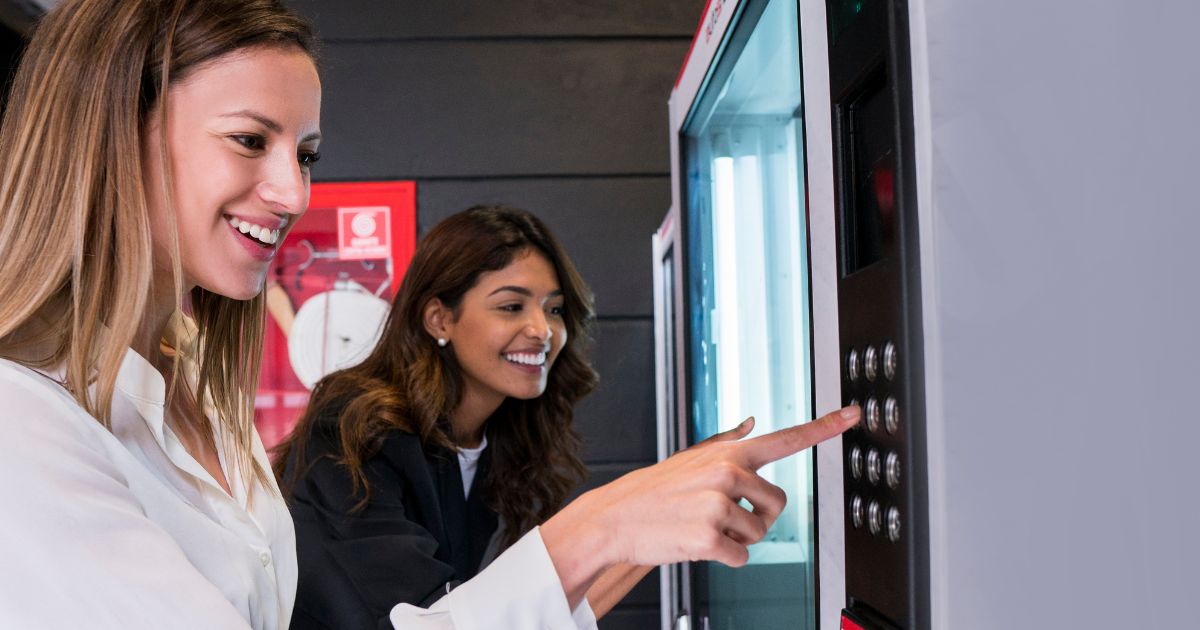
Services Offered: As a Naturals2Go operator, your “product” is essentially an array of automated retail machines that sell snacks and drinks. These are full-size, modern vending machines (Naturals2Go’s proprietary MVP machines) loaded with healthy snacks, beverages, and even meals depending on demand. The franchisee’s role is to place these machines in high-traffic locations and keep them stocked and maintained. End consumers (employees, students, visitors, etc.) then purchase items directly from the machines. It’s a business-to-consumer model delivered through B2B partnerships – you might secure placement in an office building or a school, but your revenue comes from the individuals buying from the machine. Naturals2Go machines are high-tech: they accept credit cards and mobile payments, have remote monitoring systems, and feature large screens for ads or nutritional info. Each machine holds up to 500 items, which is 45% more capacity than many competitors’ machines. That means more variety for customers and fewer refill trips for you. In short, franchisees offer convenient, healthy snacking solutions to locations that want better vending options. Typical placement sites include workplaces, hospitals, fitness centers, community centers, and anywhere foot traffic and demand for snacks intersect.
Owner’s Role: One big appeal of the Naturals2Go model is that it can be run by a single owner-operator without staff, especially at the start. “No employees, no overhead” is a tagline the company uses. In practice, as the owner you’ll be responsible for servicing your machines – stocking inventory, collecting cash (though most sales are cashless now), and ensuring the equipment stays in good shape. However, this is not a full-time daily job once your machines are placed. Naturals2Go highlights that it’s semi-absentee friendly, meaning you can keep your day job initially and service machines on evenings or weekends. How much work is involved? It depends on the number of machines and how busy they are. The company’s president noted that new operators typically spend a few hours per week per machine, and that time commitment often decreases as you get more efficient. Your machine is essentially “your best employee,” handling sales 24/7 while you handle periodic restocking and management. You won’t be stuck behind a counter or chained to a storefront; instead, you’re out building relationships with location partners and ensuring the machines run smoothly. Some franchisees start part-time (5–10 hours/week), and as their route grows, they might scale up to full-time or hire a helper for restocking. Overall, Naturals2Go lets you work on your business flexibly, since the machines are doing the selling around the clock.
Training & Support: Even though Naturals2Go doesn’t charge traditional franchise fees, it provides a robust support system akin to a franchise. New operators receive comprehensive training to launch their business. This includes two days of hands-on training at the company’s facility in Savannah, GA, where you learn machine operation, product selection, maintenance, and business basics. (Travel and lodging for training are at your expense.) Beyond the initial training, Naturals2Go provides ongoing mentoring and support for the life of the program. You’re not left on your own after buying the machines – the company has teams to assist with site selection, contract closing with location owners, machine installation, and technical support if issues arisei. Notably, every Naturals2Go business package even includes professional location procurement assistance: they will send a locator specialist to your city to secure placements for your machines (this is a huge help, as finding good locations is critical). Once you’re up and running, you have access to an experienced operator support group and an account management team that helps you maximize ROI from each machine. In summary, franchisees get a turnkey startup (machines + training + placement help) and long-term support, even though they operate independently day-to-day. The company also assists with financing options (they have SBA loan relationships and a track record of zero defaults, as they claim) to help new owners fund the purchase of machines.
Equipment & Technology: The heart of this business is the equipment. Naturals2Go prides itself on providing best-in-class vending machines to its operators. The flagship “MVP” machine is assembled in the USA and comes equipped with features like remote online management (so you can see sales and inventory levels from your computer or phone), support for cashless payments (credit/debit, mobile pay – important since 80% of today’s vending purchases are cashless), and interactive touchscreens. These machines are bigger and smarter than a typical old-school vending box. High capacity means you can offer a wide variety of healthy snacks and drinks at once – from protein bars and trail mix to vitamin water or even fresh food – and you won’t need to refill daily. The tech features reduce labor and downtime: for example, you’ll get alerts when an item is running low or if there’s a malfunction, and you can often fix pricing or settings remotely. Franchisees also get guidance on product sourcing (where to buy your snacks at wholesale) and pricing strategy for their market. Naturals2Go even stays active in industry trends (they’re involved with NAMA, the national vending association) to keep operators updated on the latest in cashless tech or consumer preferences. Bottom line: you’re given modern tools to run an efficient vending business rather than having to figure it all out alone.
Startup Costs and Ongoing Fees
One of the most important questions: what does it cost to start a Naturals2Go vending business? The investment is essentially the purchase of a vending machine package. Naturals2Go offers several entry levels based on how many machines you want to launch with. In 2025, the company lists total initial investments ranging from about $76,000 up to $230,000. Here’s how that breaks down:
- Initial Investment: ~$76K on the low end would get you a package of 6 machines (suitable for a part-time start), whereas ~$230K would get about 20 machines (a full-scale operation). They offer tiers like MVP-6, MVP-8, MVP-10, etc., where for example 10 machines costs roughly $125K (indeed, the average new owner starts with ~10 machines for about $125,000 investment). These package prices include the vending machines themselves, initial training, placement assistance, and presumably some startup stock of product. Since Naturals2Go is not charging a separate franchise fee, the package cost is the main startup cost – it’s essentially buying the equipment and support bundle.
- Franchise Fee: $0. There is no franchise fee at all, which is a big differentiator from most franchises. You’re not paying an upfront licensing fee for the brand; your investment all goes toward launching your business (machines, training, etc.). Naturals2Go can do this because they make their money by selling the machine packages and supporting you, rather than ongoing fees.
- Royalty and Marketing Fees: $0. There are no ongoing royalties or national ad fees due to Naturals2Go. Franchisees keep 100% of their vending sales. This is very unusual in franchising – even many “business opportunities” might have some monthly fee, but Naturals2Go prides itself on no profit sharing. They also don’t charge a marketing fund contribution. This means once your machines are up and running, the cash flow is yours (aside from normal operating expenses). The company instead earns revenue from selling the machines and support services up front.
- Other Startup Costs: Outside of the Naturals2Go package itself, you should budget for business licenses/permits (these vary by city/state but are usually a few hundred dollars or less), your initial inventory (snack and drink stock to load the machines), and perhaps a suitable vehicle for transporting product to your locations (many operators start with a personal vehicle; a van might be useful as you scale). You’ll also want to have some working capital for the first few months (for buying more inventory, fuel, insurance, etc.). Naturals2Go requires at least $25,000 in liquid capital and $150,000 net worth for candidates, ensuring you have a financial cushion.
- Ongoing Operating Costs: Since there are no royalties, your ongoing expenses will mostly be the standard costs of running a vending operation. Key ones include inventory restock (the snacks and drinks – typically about 50% of your vending sales will go toward product costs), machine maintenance (they’re new machines, but you’ll eventually have parts to fix or upgrade; plus things like credit card reader fees or wireless connectivity fees), and fuel/vehicle maintenance for servicing your route. You’ll also likely pay commissions to locations in many cases. When you place a machine at, say, a gym or hotel, it’s common to give the location owner a small cut of the sales (perhaps 10–15%) as an incentive. Naturals2Go notes that commissions are usually just “pennies on the dollar” and won’t hurt your profits if the location is doing solid volume. For instance, if a machine sells 100 items a day, a 10% commission might be only ~$10 of that daily revenue – easily covered by your margins. Not all locations will demand a commission, but be prepared to negotiate that. Aside from those, ongoing costs are relatively low: you don’t have employees to pay (unless you later hire someone to help refill machines), you don’t have rent or utilities for a commercial space (most operators run it from home), and insurance costs are modest (general liability to cover accidents, maybe property insurance for the value of your machines). Overall, Naturals2Go is positioned as a low-overhead business – once your machines are placed, the goal is that they generate steady cash with only periodic input (refilling, etc.) from you.
One thing to note: Naturals2Go does not disclose earnings averages for their operators. The Franchise Disclosure Document (FDD) has no Item 19 earnings claim, so it’s up to each entrepreneur to project revenue based on location quality and machine sales. Vending income can vary widely. For example, a machine in a prime spot (say a busy hotel or a large office building) could generate hundreds of dollars in sales per day, whereas a poorly placed machine might do only a few dollars a day. The range is huge – one scenario might net only $5 profit in a slow day, and another could net $175 in a great day. Your actual results will depend on how good your locations are, what products you sell, and how well you manage the operation. Naturals2Go’s support in securing high-traffic sites is therefore critical. The good news is that because there are no royalties, once you’ve covered your costs, additional sales mostly translate into your profit. And since you can add machines over time, your earning potential can scale up as high as you want (there are Naturals2Go operators with 15-20+ machines, effectively running a significant vending enterprise).
How the Industry Itself Compares
With Naturals2Go, you’d be entering the vending industry, whereas Assett Franchise operates in the commercial cleaning industry. These two industries are very different in day-to-day operation and long-term business dynamics. Let’s compare healthy vending vs. commercial cleaning in practical, financial, and operational terms. We’ll start with what healthy vending (Naturals2Go’s arena) has going for it, then contrast that with the advantages of the commercial cleaning industry. Both have their merits, but as we’ll see, running a cleaning business can offer more stability and scalability for the long haul.
Naturals2Go Industry Advantages
If you’re drawn to something like Naturals2Go, it’s likely because of several appealing aspects of the vending business model. Here are some advantages of the healthy vending industry (and Naturals2Go’s approach within it) that prospective owners might consider:
- Flexible & Semi-Absentee Friendly: Vending can be run as a side business or scaled up full-time at your own pace. Naturals2Go explicitly allows for semi-absentee ownership – you can keep your job while starting the business. Servicing machines can often be done on weekends or evenings. This flexibility is great for first-time entrepreneurs or those with busy schedules. You’re not tied to a 9-5 retail location; the machines make money even when you’re not there, and you can organize your restocking routes around your life. Many owners appreciate that “be your own boss, but keep your day job” aspect as they ramp up.
- No Payroll Headaches: Unlike most service businesses, a vending operation typically does not require any employees on payroll (at least until you scale very large). There’s no need to recruit or manage a big team for daily operations – the machines are doing the selling. Naturals2Go emphasizes “no employees, no overhead” as a selling point. This means no worrying about sick calls, no labor law compliance issues, and no salaries eating into your profits. For someone who prefers a one-person business, vending is ideal. Your time is spent maintaining machines and securing locations, not supervising a crew.
- Lower Overhead & Home-Based: A healthy vending business has minimal overhead costs compared to, say, a retail store or a service franchise that requires an office. You don’t need a storefront or office lease – you can run it from a home office and a storage area for extra product. There are also no utility bills for your machines beyond maybe a small amount of electricity at the host location (often covered by the location). As noted earlier, no employee wages either. Many vending entrepreneurs break even faster because they aren’t weighed down by fixed monthly expenses. Naturals2Go’s model is home-based, which keeps costs down and makes it easier to start with limited capital.
- Quick Cash Flow & Simple Transactions: In vending, revenue is collected on the spot – a customer puts money in the machine (or swipes their card), and you get paid instantly. There’s no invoicing clients and waiting 30+ days for payment (as in some B2B businesses). There are no “bad checks” or accounts receivable to worry about. This immediate cash flow is great for liquidity. Each item sold is a small transaction, but they add up over time. Also, because it’s mostly a cash/credit card business, bookkeeping can be simpler (the machines can even produce sales reports). It’s a straightforward revenue model – quarter by quarter, dollar by dollar goes straight into the machine.
- Passive Income Potential: Vending machines can generate sales 24/7 without you present – in that sense, they provide a degree of passive income. A good location (imagine a hotel lobby or a hospital waiting room) might be selling products round the clock, including overnight, essentially making money while you sleep. Few businesses offer that scenario. If you set up enough machines in strong locations, the aggregate income can be quite significant with relatively limited daily active work on your part beyond maintenance and refills.
- Health & Wellness Trend: Naturals2Go sits at the intersection of vending and the booming health/fitness trend. Consumers today are more health-conscious, and many appreciate having convenient access to better snacks (think protein bars, nuts, sugar-free drinks) instead of just chips and candy. Positioning your business as “helping people eat healthier on the go” is a feel-good aspect – it can be rewarding and also advantageous in marketing to location partners (e.g. a school or corporate office might prefer a healthy vending machine as an employee perk). This niche focus differentiates Naturals2Go operators from generic vending companies and can open doors to premium placements that want healthier choices.
- Scalable on Your Terms: The vending industry is highly scalable – you can start with a handful of machines and gradually reinvest profits to buy more machines. Each new machine is a new income stream. Naturals2Go’s model is “part-time to full-time, scale as big as you want” according to ifpg.org. You’re not limited by territory (Naturals2Go doesn’t assign exclusive territories, so you can expand wherever opportunity knocks). If you want to double your business, you might buy another set of machines and find more locations, effectively doubling revenue potential. There’s no need to build a new store or office – growth is as simple as deploying more vending units. This modular growth means low risk expansion – you grow when you’re ready and when cash flow supports it.
- Technology & Ease of Operation: Modern vending has leveraged technology in a big way. Naturals2Go’s system uses remote monitoring and smart machines, which makes the business easier to run than old-school vending. You can check sales data online, see which products are low, and plan your restocking efficiently. Machines can send alerts if there’s an issue (like a coin jam or a compressor problem), so you’re not discovering issues days later. Accepting credit cards and mobile pay also boosts sales (people spend more when not limited by the change in their pocket) and reduces the hassle of emptying coins. All these tech perks mean less grunt work for the owner and a more reliable operation. Plus, Naturals2Go provides ongoing technical support, so if a machine acts up, you have experts to call. Overall, running a vending business today can be quite streamlined and “high-tech”, which appeals to those who enjoy leveraging gadgets and data to improve a business.
Of course, no industry is perfect. While healthy vending has the above benefits, it also faces challenges like maintaining good locations (you might lose a spot if an office closes or a competitor swoops in), keeping machines vandalism-free, and the variability of consumer spending. Small transactions can mean you need a lot of volume to hit high revenues. There’s also the physical work of hauling snacks around and refilling machines regularly – it’s not hard labor, but it’s a task to account for. Seasonality is mild in vending but can exist (e.g. a school location might slow down in summer, or cold drink sales dip in winter). These factors make the vending business exciting but also unpredictable at times. Now, let’s see how all of this stacks up against the commercial cleaning industry that Assett Franchise operates in.
Compared to Commercial Cleaning Industry
When comparing healthy vending to commercial cleaning, several clear differences emerge. Commercial cleaning is a service industry that operates on long-term client relationships, whereas vending is a retail-like business with point-of-sale transactions. Here are the key advantages of the commercial cleaning industry (and by extension, a cleaning franchise like Assett) and why it’s often considered a more stable and scalable path:
- Massive, Essential Market: The market for commercial cleaning is enormous – over $100 billion annually in the U.S., dwarfing niches like healthy vending. Nearly every business facility requires cleaning. From offices and schools to hospitals and warehouses, someone has to clean these spaces regularly, regardless of the economy. Cleaning is widely regarded as an essential service. Companies can’t skimp on cleanliness without risking health, compliance, and reputation. Even during recessions or pandemics, cleaning demand tends to persist or even increase (for instance, COVID-19 spiked the need for sanitization). This means the industry is recession-resistant – cleaning isn’t a luxury that gets cut first; it’s a necessity to keep operations running safely. In short, commercial cleaning serves a fundamental need in all economic climates, providing a very secure foundation for a business.
- Predictable Recurring Revenue: Unlike vending, where every day’s sales depend on who walks by, commercial cleaning typically runs on recurring contracts. Businesses sign cleaning contracts for services daily, weekly, or monthly. This creates a steady, predictable revenue stream for cleaning companies. For example, a client might contract Assett Franchise for nightly office cleaning at $X per month, with a one-year term auto-renewing. You can bank on that income and even project growth by the contracts you sign. This B2B recurring revenue model means you’re not chasing individual one-off sales; you build a portfolio of client accounts that provide revenue month after month. It’s much easier to plan and scale when you have stable contracts versus hoping people buy from a machine. Recurring contracts also make the business easier to finance and potentially sell down the road because of the predictable cash flow.
- “Recession-Proof” Stability: Commercial cleaning franchises are often touted as recession-resistant or recession-proof franchises, for good reason. During tough economic times, companies might cut discretionary spending, but they still need cleaning – if anything, cleanliness becomes more important to attract customers or comply with health guidelines. Cleaning contracts usually continue even in downturns, and because cleaning is a low-cost service relative to a company’s overall budget, it’s not usually the first thing to drop. Additionally, the diversity of client types (corporate offices, medical facilities, government buildings, etc.) provides a buffer: if one sector slows, others may be steady or growing. For instance, during COVID, many offices went remote (reducing cleaning frequency) but hospitals and warehouses needed more cleaning – a cleaning business can shift focus accordingly. The bottom line is that a cleaning business can withstand economic ups and downs better than many consumer-facing businesses. It provides a sense of long-term security for franchise owners that the vending model, with its daily sales volatility, may not.
- Low Cost of Entry & High Upside: In commercial cleaning, the startup costs are relatively low and the income potential is high, which is a rare combination. You typically don’t need expensive equipment or real estate to start a cleaning business – often just a franchise fee, basic cleaning tools, and a vehicle. For example, many cleaning franchises (Assett included) can be launched for well under $100K, sometimes even half that, depending on the model. Yet the revenue per customer can be substantial (a single commercial contract might be worth tens of thousands annually). Assett Franchise, specifically, is built around achieving $1M+ in annual recurring revenue, which they position as an attainable goal for franchisees through scaling contracts. Hitting seven figures in sales with a vending business would likely require dozens upon dozens of machines; in cleaning, it might be achieved with a roster of, say, 50-100 client locations (depending on size of contracts) – something feasible within a few years of growth. The cleaning industry thus offers a big upside in income without a correspondingly big increase in complexity or cost. You’re essentially selling labor and expertise, not expensive products, so profit margins can be healthy. Many cleaning franchise owners reach a comfortable six-figure income once their client base is built, with the business continuing to grow via referrals and expanding contracts.
- Scalable Without Heavy Capital Investments: To scale a vending business, you must buy more machines (capital expense), but to scale a cleaning business, you mainly need to add more labor as contracts increase – which doesn’t require large upfront capital, especially under Assett’s model where hiring is streamlined. There’s no costly equipment or manufacturing bottleneck in cleaning. You don’t have to buy a $10K machine for each new client; you might just buy another $300 vacuum. This makes growth more incremental and affordable. Additionally, cleaning doesn’t require storefronts or new territories – you can expand within your region freely by taking on more clients. It’s conceivable to double your revenue just by signing a couple of large new contracts, all while working from the same home office. The ability to scale quickly and efficiently is a hallmark of commercial cleaning, especially with systems in place to handle operations (we’ll discuss Assett’s automated hiring below, which directly addresses scaling pain points). As one franchise expert quipped, commercial cleaning is sometimes called “boring but beautiful” – boring because it’s a simple, no-frills service, but beautiful because it reliably generates cash and can scale almost limitlessly in a fragmented $100B market.
- Lower Competition & Client Loyalty: The competitive landscape in commercial cleaning is generally localized and relationship-based. When you land a cleaning contract, you usually keep it for years by maintaining quality and good client rapport. There’s a high switching cost for clients – they don’t change cleaning providers on a whim, since that could risk service disruption. So if you perform well, your client retention can be very high. In vending, by contrast, a location could replace your machine with another vendor’s if they offer a better deal or product mix, often with little friction. Cleaning is less commoditized: clients care about trust, consistency, and responsiveness. It’s not just about price or a product on a shelf. This means a cleaning franchise can build a moat of loyal customers over time. Also, while cleaning is indeed a competitive field (lots of small independent cleaners out there), a franchise like Assett gives owners an edge with professional systems and branding that mom-and-pop cleaners may lack. And unlike vending (where you might compete with onsite cafeterias, micro-markets, or other vending companies for space), in cleaning each contract is exclusive – once you’re the chosen cleaning provider for an office, no competitor can “share” that contract unless you falter.
- No Daily Sales Dependence: Commercial cleaning revenue doesn’t fluctuate day-to-day based on foot traffic or consumer whims. Contracts often bill monthly or on a set schedule, so you’re not sweating whether people feel like buying a snack today. This removes a huge layer of uncertainty. For instance, a vending operator might see lower sales if a building has low occupancy on a given week, but a cleaning contract for that building typically still pays out regardless of how many people showed up to work. In essence, cleaning is usage-agnostic – the floors need vacuuming whether 100 people were in the office or 10 people were. This can make the business more resilient to things like seasonal dips or unexpected events. It also means scaling is in your control (through sales efforts to get new clients) rather than reliant on boosting same-site sales.
- Systematization and Simplicity: Despite being a service business, commercial cleaning can be highly systematized (especially in a franchise setup). The operations involve repetitive tasks that can be trained and standardized. Franchises like Assett provide playbooks for everything from how to price jobs to how to perform quality inspections. For an owner, this translates to a business you can work on, not in – meaning you focus on managing systems and people rather than doing the cleaning yourself (Assett explicitly wants owners to be executives, not janitors). This managerial model is attractive for those wanting to grow an enterprise and eventually step back from day-to-day. You can hire crew members and managers as you grow, and with tools like scheduling software and quality checklists (which Assett and others provide), it’s quite feasible to oversee dozens of client locations methodically. The cleaning business might lack the “cool factor” of a techy vending machine, but its very simplicity is what makes it scalable with less stress – there are fewer moving parts in the business model itself (no inventory spoilage, no coin jams, etc., just people performing a routine service).
In summary, the commercial cleaning industry offers long-term stability, recurring revenues, and scalability that can surpass what a vending business typically achieves. It’s an essential B2B service with high demand and low sensitivity to economic swings. That said, it’s fair to acknowledge that healthy vending has its own appeal – it’s more of a set-and-forget retail play, which might suit someone who hates managing people and enjoys a very solitary business. It can also be started smaller and run alongside another job initially, which is a plus. But if your goal is to build a larger, wealth-generating business that can grow into a full-time enterprise (and eventually operate with you as a semi-absentee owner), commercial cleaning provides a clearer path to that outcome. Next, we’ll look specifically at Assett Franchise and how it leverages the cleaning industry’s strengths while also innovating on some of its toughest challenges (like hiring).
How the Assett Franchise Compares
Having examined Naturals2Go and the vending vs. cleaning industries, let’s focus on Assett Franchise – the commercial cleaning franchise we’re ultimately comparing to. Assett is designed for aspiring business owners who want the stability of the cleaning industry plus a modern, support-driven franchise system to accelerate success. In this section, we’ll see how Assett differentiates itself with simpler operations, automated hiring, and a personal touch from leadership. If Naturals2Go is about machines and healthy snacks, Assett is about people and proven systems to build a million-dollar cleaning business.
Simpler Systems, Bigger Potential
Assett Franchise is built on the premise of making business ownership simpler and more scalable than traditional models. Since it operates in the $100B+ commercial cleaning sector, Assett starts franchisees off in a huge, high-demand market. But the franchise goes further by engineering systems that streamline almost every aspect of running a cleaning business. It’s specifically geared toward owners who, as the saying goes, want to work on the business, not in it. What does that mean? As an Assett franchisee, you won’t be spending your nights mopping floors; instead, you’ll be managing a team of cleaners and growing the client base, using Assett’s blueprint to guide you.
A few key features illustrate these simpler systems:
- Turnkey Playbook: Assett provides a complete business playbook distilled from years of commercial cleaning experience. New franchisees get step-by-step procedures for everything – how to quickly acquire clients, how to bid on contracts profitably, how to train and manage cleaning crews, and how to maintain quality as you scale. This means even if you have no prior cleaning or business experience, you can follow the franchise system and hit the ground running. (In fact, no industry experience is required at all; Assett trains you from the ground up, similar to how Naturals2Go trains people with no vending background.) The playbook turns what could be a complex learning curve into a repeatable process.
- Owner as Executive, Not Janitor: Assett’s model is explicitly designed for executive-style ownership. The expectation is that you act as a CEO of your local operation – focusing on client relationships and business growth – while hiring others to perform the cleaning work. The franchise’s motto could well be, “You don’t do the cleaning… you manage those that do,” much like other successful cleaning franchises emphasize. This is attractive for professionals who want to leverage their leadership and organizational skills, rather than doing manual labor. Assett provides guidance on how to staff up and delegate effectively so that the business can scale without you doing all the labor. In practice, this means from early on you’ll be recruiting cleaners (with help from Assett’s systems) and focusing your personal time on higher-level tasks like signing new contracts and ensuring customer satisfaction.
- High Income Focus – $1M+ Recurring Revenue: Perhaps the biggest differentiator is Assett’s focus on building a $1M+ annual revenue business. Assett’s leadership openly emphasizes that their goal for every franchisee is to reach the $1 million sales milestone (and beyond) through accumulating recurring contracts. Many commercial cleaning franchises do have multiple franchisees that eventually cross seven-figure revenues (by serving dozens of clients such as schools, office buildings, medical centers, etc.), so this isn’t an unrealistic puffery – it’s a concrete target that numerous cleaning business owners have achieved. Assett makes this target part of its culture, mentioning “building a million-dollar business” as the expectation, not the exception. They back this up by giving franchisees the tools to scale: for example, training on when to hire a field supervisor, how to structure cleaning teams as the client list grows, and how to maintain service quality across 50+ customer locations. Because cleaning contracts provide recurring revenue, hitting $1M is not a crazy moonshot – it’s a matter of landing enough contracts and keeping them. Assett’s model helps franchisees reinvest cash flow into growth (marketing, hiring) rather than being drained by overhead or one-time sales. Unlike a retail franchise where a single unit might cap out at a certain sales volume, an Assett franchise can keep growing by adding more client accounts without a hard cap. This bigger potential is enabled by the simplicity and low overhead we discussed: you’re not limited by a physical location’s foot traffic or by expensive expansion costs. In essence, Assett wants owners to dream bigger – to build an enterprise that could substantially exceed the income of a typical single-unit franchise. Many first-time business owners find it encouraging that the franchise is planning for them to scale to seven figures, not just break even.
- “Work Smarter” Approach: The ethos at Assett is very much “work smarter, not harder.” They leverage modern tools and support systems so that franchisees can manage a large business with a relatively small time commitment. An example is how Assett handles the biggest pain point (hiring) which we’ll cover next – by automating it. Another example is the use of professional management software for scheduling and operations (similar to how some cleaning franchises provide proprietary software). By having software to handle scheduling of dozens of cleaners across various client sites, or to track inspections, an owner can effectively keep tabs on a sprawling operation with less effort. Assett’s model is all about efficiency at scale – doing more with fewer headaches. The ultimate goal is an owner could run a large franchise without working 60-hour weeks; indeed, Assett suggests it can even be run semi-absentee with as little as ~5 hours/week once fully ramped up (if you have a manager in place). All of this comes down to having simplified systems that reduce the typical burdens of the business. For a franchisee, that means faster growth and a lighter workload than if you tried to build the same business on your own.
Overall, Assett Franchise offers a simpler operational model in a huge, stable industry, with an explicit emphasis on high income potential. You’re essentially plugging into the commercial cleaning field already armed with a proven model that can ramp up to $1M+ in recurring sales. The franchise’s design enables you to scale up without scaling stress – it teaches you how to grow a large customer base while keeping your personal workload reasonable. Next, we’ll look at one of Assett’s hallmark innovations that exemplifies the “work smarter” philosophy: its automated hiring system.
Automated Hiring = Time and Money Saved
Ask any experienced cleaning company owner what their #1 challenge is, and you’ll likely hear: “finding and keeping good employees.” High turnover among cleaning staff and the constant need to recruit replacements are notorious headaches in this industry. Assett Franchise tackled this issue head-on by developing a proprietary Automated Hiring System that essentially eliminates the franchise owner’s heavy lifting in recruitment. This system is a game-changer and a signature advantage of Assett’s model.
So, what exactly is the automated hiring system? In simple terms, it’s a technology-driven recruiting pipeline that continuously finds, screens, and onboards cleaning staff for your business – largely without you having to do it manually. It runs 24/7 in the background, doing things like: posting job ads online, collecting applications, filtering candidates through assessments, and even scheduling interviews or orientations. Assett has programmed in the criteria (based on traits of successful cleaning employees) to automatically weed out candidates who are likely unreliable and flag those who fit the desired profile. By the time an applicant gets to you or your manager, they’re pre-vetted and often already briefed on the job basics. In essence, Assett built an in-house “HR engine” for hiring cleaners so that you, the franchisee, don’t get bogged down in a 20-hour-per-week chore of recruiting and interviewing.
The impact of this system on an owner’s life cannot be overstated. According to Assett, the automated hiring platform saves an owner roughly 20–30 hours per week that would otherwise be spent on recruiting tasks (writing job posts, reviewing resumes, calling candidates, scheduling interviews, etc.). It effectively takes what might be a part-time HR job or the cost of a dedicated recruiter and reduces it to just a couple hours of oversight from the franchisee. Instead of constantly scrambling to fill crew vacancies or panicking when a cleaner quits with no notice, you have a steady pipeline of qualified workers ready to step in. That means your cleaning contracts aren’t jeopardized by staff shortages, and crucially, you as the owner won’t have to grab a mop at 9pm because an employee no-showed. The system also uses automated follow-ups and scheduling tools to improve show-up rates and retention during the hiring process. The end result is a consistently staffed operation where jobs get done on time and to standard, and you’re free to focus on growing the business rather than constantly plugging holes in the workforce.
Financially, automating hiring saves money too. High turnover is expensive – think of the costs of constantly placing ads, the time spent training people who leave, or worst of all, lost client revenue if you’re short staffed. Some independent cleaning businesses eventually have to hire a full-time HR manager at, say, $40-50K/year just to keep up with recruiting. As an Assett franchisee, you can avoid that expense because the system performs much of that function for you. By keeping your operation fully staffed through an efficient pipeline, you also maintain quality and don’t miss cleanings (so clients stay happy and stick around, feeding your recurring revenue). In effect, Assett solved the labor bottleneck of the cleaning industry and turned it into a competitive strength for franchisees. This is not something an indirect competitor like Naturals2Go even has to think about – vending operators deal with machines and inventory, not hiring – but in cleaning, the ability to build and keep a reliable team is absolutely crucial for scaling. Assett provides that solution on a silver platter, which is a huge relief for first-time business owners who might dread the thought of hiring dozens of employees.
For you as a prospective owner, Assett’s automated hiring means peace of mind and time back in your life. Instead of spending evenings and weekends posting job listings or rushing to find a replacement cleaner, you trust that your workforce needs are being handled systematically. This easily gives you 20+ hours a week of time that you can reinvest into high-value activities – like signing new clients, strengthening customer relationships, or simply enjoying downtime as a business owner (the reason many of us want to own a business is for more freedom, after all!). By solving the toughest part of the business, Assett allows you to scale up faster and with far less stress than a typical cleaning company owner. It’s like having an always-on hiring manager that doesn’t draw a salary. This kind of innovation is a clear example of how Assett is “built for owners who want to work on the business, not in it.” In sum, automated hiring removes a major growth hurdle and cost from the cleaning business model, empowering Assett franchisees to focus on expanding their revenue without being consumed by HR tasks.
Personalized and Founder-Led
Another way Assett Franchise stands out is through its company culture and support structure. Assett is a family-owned, founder-led franchise – not a faceless corporation or private equity-owned conglomerate. This has real benefits for franchisees. When you join Assett, you’re joining a close-knit franchise family where you have direct access to top leadership as stated in bizbuysell.com. In fact, Assett’s founder and CEO, Matt Pencarinha, is personally involved in onboarding and mentoring new franchise owners (as noted in Assett’s franchise materials and listings). Matt built the original Assett commercial cleaning business himself from the ground up, so he knows every detail of scaling a service company and shares that experience with franchisees. The result is that franchisees benefit from his passion and know-how: as the founder, he’s deeply invested in each owner’s success – something that can get lost in larger systems where franchisees might never even meet the CEO.
Being founder-led means there are fewer bureaucratic layers. If you have a suggestion or an issue, you can get the ear of the decision-maker quickly. Assett prides itself on maintaining an entrepreneurial, agile spirit – they listen to feedback from the field and iterate on systems as needed. For franchisees, this translates into a more personalized support experience. You’re not “franchisee #2035” in a giant system; you’re John or Jane, and the leadership knows you by name. If you run into a challenge, you can reach out to the founder’s team and expect a responsive, hands-on approach to help solve it. This is a stark contrast to some older franchise systems where franchisees sometimes feel like just another unit in the chain. Assett’s culture emphasizes one-on-one coaching, responsive support, and a partnership mentality with owners.
Because the company is family-owned (not backed by outside investors), decisions at Assett are made for the long-term health of the brand and franchisees, rather than short-term profit extraction. Many franchise brands that get sold to private equity eventually focus heavily on rapid expansion or cutting costs, sometimes at the expense of support or franchisee profitability. Assett’s ownership structure ensures that maintaining quality and supporting owners remains the top priority. Matt Pencarinha’s personal reputation is on the line with every franchisee, so the team goes the extra mile in providing guidance and maintaining high standards. New franchisees get direct training from the founder’s team, private coaching sessions during launch, and ongoing check-ins with leadership as needed. This high-access, high-support model is something Assett can offer as a newer, entrepreneurial franchise system, and it’s a huge boon for first-time franchisees who crave that hands-on mentorship.
Assett is also a mission-driven and community-focused company. Their mission is to “remove the burden of facility cleaning for clients so those clients can achieve their own missions”. In practice, that means Assett franchisees see their work as a partnership with local businesses and institutions – helping schools provide safe, clean environments for kids to learn, helping healthcare facilities maintain infection control, etc.. It’s about more than making money; it’s about making a positive impact in each community by ensuring healthy, clean spaces. This ethos tends to attract franchise owners who care about service quality and community relationships. Assett encourages franchisees to be involved locally and build trust with clients as a reliable partner, not just a vendor. This dovetails with the family-business ethos: values like honesty, integrity, and treating clients (and employees) like part of the family are emphasized. For someone comparing opportunities, consider that with Assett you’re joining a franchise where culture and values are front and center, driven by a founder who wants to create a franchise family, not just sell franchises.
In contrast, an indirect competitor like Naturals2Go is a more transactional business opportunity – you buy machines and you’re off on your own (with support, but not the same personal touch since it’s not a traditional franchise community). Assett offers a more personal touch and leadership accessibility that can make your journey smoother and more rewarding. You’re not navigating challenges alone; you have the founder and a community of fellow owners by your side. That kind of environment can make a huge difference, especially for first-timers who benefit from encouragement and advice from someone who’s done it before. It’s the difference between entering a large corporate franchise where you might deal mostly with middle managers, vs. joining an entrepreneurial system where you have a seat at the table with the people who created the system.
To sum up, Assett being founder-led and family-run translates into a supportive, agile, and values-driven franchise experience. Franchisees get to form real relationships with leadership, contribute ideas, and feel like part of a family – not just an entry in a spreadsheet. This philosophy, combined with the automated systems and huge market discussed earlier, makes Assett a very compelling alternative for someone considering various franchise paths.
Final Thoughts
Naturals2Go is a solid franchise opportunity for the right type of buyer. If you’re excited about automated retail, want a mostly one-person business, and are passionate about healthy snacks, a Naturals2Go franchise can be a fun and flexible venture. It offers low overhead, no royalties, and the chance to generate semi-passive income through machines that work 24/7. For someone who prefers minimal client interaction (beyond securing locations) and enjoys tech and logistics, healthy vending can be rewarding. You get to be part of a health trend and can start small, scaling at your own pace. Naturals2Go provides strong initial support in site selection and training, which lowers the barrier to entry for newcomers.
However, when it comes to long-term business growth, stability, and income potential, the Assett Franchise offers more advantages for most entrepreneurs – especially those aiming to build a sizable, scalable company. Commercial cleaning, as delivered by Assett, provides a scalable, stable platform where you can achieve significant income (including $1M+ in recurring revenue) without the complexity or unpredictability that other industries might have. You’re investing in a simpler concept that fulfills an essential need in all economies, and you’re doing so with the backing of a franchise that has innovated key systems (like automated hiring) to remove the usual risks and headaches of growth. The cleaning business model is built on repeat contracts and B2B relationships, which means predictable cash flow, low market risk, and high customer retention. You’re not betting on consumer foot traffic or trends each day – you’re building client partnerships that often last for years.
If you compare the two paths: Naturals2Go might appeal to someone who wants a small, semi-passive income stream and doesn’t mind physically servicing machines, often working solo. It’s relatively low in operational complexity but also limited in upside unless you invest heavily in more machines. On the other hand, Assett Franchise is designed for those who want a business that can grow into a true enterprise – one that can be managed semi-absentee (thanks to systems like automated hiring), and that delivers predictable recurring revenue and equity value over time. You won’t need to rely on selling thousands of $2 snack items or worry about a location’s foot traffic dropping off. Instead, you’ll cultivate a portfolio of commercial clients who need their facilities cleaned come rain or shine. The risk is lower, the market is broader, and Assett’s modern approach (tech automation + founder-led support) makes the path to profitability faster and more predictable.
It’s telling that franchise industry insiders often describe commercial cleaning as “boring but beautiful” – boring because it’s simple and behind-the-scenes, but beautiful because it reliably generates cash flow and withstands economic ups and downs. For an owner, that “boring” translates into peace of mind and steady growth, which is ultimately what most people leaving a job for a franchise are looking for.
In the end, the choice comes down to your personal goals and preferences. Naturals2Go can be a great fit for someone who values autonomy, gadgetry, and a lean operation focused on products. But if you’re looking for a business that can deliver long-term income, flexibility, and executive-level control, Assett Franchise is hard to beat. You’ll be stepping into a huge essential industry with a partner that has already solved the toughest parts of the business for you. The ability to build a team without the usual hiring headaches, to be personally mentored by the founder, and to serve a need that will never go away – those are advantages that create a modern franchise opportunity built for lasting success.
If you’re exploring franchise opportunities and want a model that can deliver long-term income, flexibility, and control — we’d love to show you how Assett Franchise can help you build a business that works for your life. Visit https://assettfranchise.com to connect with our team and learn more.