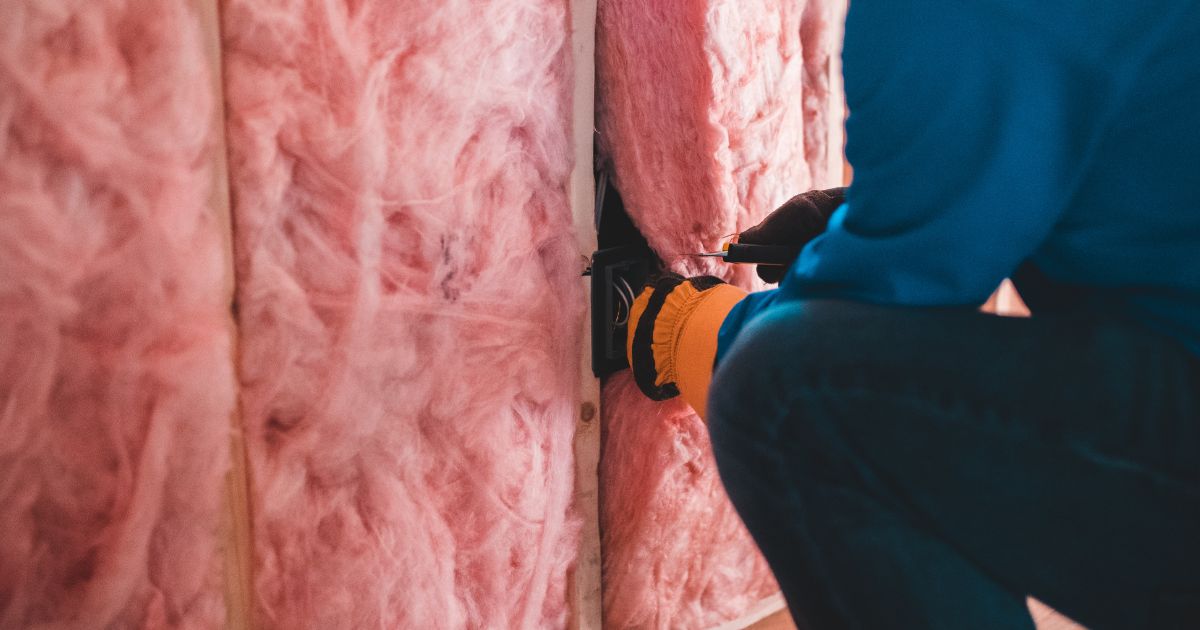
If you are exploring franchise ownership as a path out of corporate life, chances are you have come across the USA Insulation Franchise. It operates in the home services sector and promotes a specialized insulation product with energy-efficiency benefits for homeowners.
For aspiring business owners evaluating options, it is important to understand not only the brand, but also the underlying industry, cost structure, and long-term scalability. In this in-depth review, we will break down the opportunity, compare the insulation industry to commercial cleaning, and show how Assett Franchise positions itself as a compelling alternative for executive-minded entrepreneurs.
What Is the USA Insulation Franchise Opportunity?
Company Overview and Industry
The USA Insulation Franchise operates in the residential insulation and energy-efficiency industry. Founded in 1985, the company began offering proprietary foam insulation products designed to improve energy performance in existing homes. Over the years, the brand expanded through franchising and built a network of independently owned territories across the United States.
The insulation industry serves homeowners looking to lower utility bills, increase comfort, and improve property value. This places the brand squarely within the residential home improvement and retrofit market.
The franchise has grown to dozens of territories nationwide, with expansion driven by increasing awareness around energy efficiency and home upgrades. Its model focuses primarily on residential retrofits rather than large-scale commercial construction projects.
For prospective franchisees, this means operating in a home services space that requires direct-to-consumer marketing, in-home sales appointments, and project-based installations.
What Franchisees Get
Franchisees typically offer:
- Injection foam insulation for existing walls
- Attic insulation upgrades
- Crawlspace and other residential insulation solutions
The customer base is predominantly residential homeowners.
Support systems typically include:
- Initial training and onboarding
- Sales training for in-home consultations
- Marketing support and brand materials
- Access to proprietary insulation products
- Operational systems and equipment guidance
Because insulation projects require specialized equipment and installation crews, franchisees must build and manage field teams capable of completing physical installations.
Unlike B2B models, most revenue comes from one-time home improvement projects rather than recurring contracts. That means franchisees must continuously generate new residential leads through marketing, referrals, and local advertising.
Startup Costs and Ongoing Fees
According to publicly available Franchise Disclosure Document (FDD) summaries, the estimated initial investment for a USA Insulation Franchise typically ranges from approximately $180,000 to over $350,000 depending on territory size, equipment needs, and working capital.
Typical cost components may include:
- Initial franchise fee (commonly reported around $49,500, though this may vary)
- Equipment purchases (insulation blowing machines, trucks, tools)
- Marketing and grand opening expenses
- Insurance, licensing, and professional fees
- Working capital
Ongoing fees generally include:
- Royalty fees based on gross revenue (often in the 6%–8% range)
- Marketing or brand fund contributions
- Product sourcing requirements
Prospective franchisees should always review the most current FDD for exact figures, as costs and fees can change.
Because the model involves equipment-heavy operations and installation crews, working capital requirements may be higher than service-based models with minimal physical assets.
How the Industry Itself Compares
When evaluating the USA Insulation Franchise, it is critical to separate the brand from the industry itself. Even strong brands operate within the realities of their sector.
USA Insulation Industry Advantages
The insulation and energy-efficiency sector does offer benefits:
- Growing Awareness of Energy Efficiency
Rising utility costs and sustainability initiatives have increased homeowner interest in insulation upgrades. - Higher Ticket Jobs
Projects can range from several thousand dollars per home, potentially generating strong per-project revenue. - Niche Differentiation
Specialized products and proprietary foam insulation may offer some competitive differentiation. - Home Improvement Demand
The broader home services market remains active in many regions.
For franchisees comfortable with in-home sales and project-based operations, insulation can be an attractive sector.
However, these advantages must be weighed against structural industry realities.
Compared to Commercial Cleaning Industry
The commercial cleaning industry differs in fundamental ways.
Market Size and Customer Base
Commercial cleaning represents a $100B+ market in the United States. It serves commercial buildings—not individual homeowners. Clients include:
- Offices
- Schools
- Medical facilities
- Warehouses
- Retail centers
- Government buildings
This B2B focus provides a different type of stability.
Recurring Revenue
One of the most significant differences is revenue structure. Insulation projects are typically one-time transactions. Commercial cleaning contracts, by contrast, are recurring monthly agreements.
That means predictable cash flow. A well-structured commercial cleaning operation can build long-term contracts that renew year after year.
Recession Resistance
Insulation upgrades can slow during economic downturns as homeowners delay discretionary improvements. Commercial cleaning, however, is essential. Buildings must remain clean regardless of economic conditions.
During downturns, businesses may cut discretionary spending—but they do not eliminate janitorial services.
Lower Equipment Burden
Insulation operations require trucks, specialized blowing equipment, safety gear, and inventory. Commercial cleaning scales without heavy machinery or expensive real estate.
The lower asset requirement reduces financial risk.
Operational Simplicity
Residential sales require lead generation, home consultations, estimates, and closing homeowners who may have emotional buying cycles.
Commercial cleaning focuses on professional facility managers and business decision-makers. The sales process tends to be more rational and contract-based.
Scalability
Commercial cleaning businesses can scale to $1M+ in recurring revenue without investing in large equipment fleets. Growth is driven by contract acquisition and workforce management rather than capital-intensive expansion.
For first-time entrepreneurs seeking a simple, proven path, the cleaning industry offers structural advantages.
How the Assett Franchise Compares
If you are evaluating the USA Insulation Franchise, it is fair to ask how it compares to a Cleaning Business Franchise like Assett.
Simpler Systems, Bigger Potential
Assett Franchise operates squarely within the commercial cleaning industry. The model is designed for owners who want to work on the business, not in it.
Key advantages include:
- Focus on recurring B2B contracts
- Clear path to $1M+ recurring revenue
- No requirement for industry experience
- A proven operational playbook
Instead of relying on one-time home improvement projects, Assett franchisees build portfolios of commercial contracts that provide predictable monthly income.
That difference changes everything about financial planning, risk exposure, and lifestyle design.
Automated Hiring = Time and Money Saved
One of the biggest challenges in service businesses is hiring and retaining labor.
Assett Franchise addresses this with an automated hiring system designed to eliminate one of the most time-consuming headaches in the industry.
Benefits include:
- Saving owners 20–30 hours per week
- Reducing the need for a full-time hiring manager
- Ensuring consistent workforce quality
- Supporting rapid scale
In contrast, insulation operations require skilled installers trained to handle specialized equipment. Recruiting and retaining trained technicians can be more complex and equipment-dependent.
Assett’s system allows franchisees to focus on sales, leadership, and growth rather than constant hiring emergencies.
Personalized and Founder-Led
Assett Franchise is family-owned and founder-led by Matt Pencarinha, as stated in bizbuysell.com. It is not private equity controlled.
This matters for franchisees who want direct access to leadership and hands-on guidance.
Franchisees receive:
- Direct communication with leadership
- Strategic support during growth phases
- Community-focused mission alignment
In many larger franchise systems, decision-making is centralized and institutional. Assett maintains a relational approach designed to support long-term owner success.
Financial Model Comparison
To make a responsible decision, entrepreneurs must evaluate capital intensity and income potential.
USA Insulation Franchise
- Moderate-to-high startup costs
- Equipment-heavy operations
- Revenue dependent on constant lead flow
- Primarily one-time projects
- Residential sales model
Commercial Cleaning via Assett Franchise
- Lower cost of entry relative to many equipment-heavy models
- Recurring contract revenue
- Predictable monthly cash flow
- Essential service demand
- Semi-absentee potential (as little as 5 hours per week at scale)
With commercial cleaning, growth compounds. Each new contract adds recurring revenue rather than a single transaction.
That cumulative effect can accelerate income stability and enterprise value.
Risk Profile and Stability
Residential home services can experience fluctuations tied to housing markets, interest rates, and consumer confidence.
Commercial cleaning demand, however, is tied to occupied buildings and regulatory standards.
Schools require cleaning. Medical facilities require sanitation. Warehouses require maintenance.
Even during economic slowdowns, cleaning remains necessary.
For entrepreneurs seeking lower operational volatility, this distinction is significant.
Lifestyle Considerations
Many professionals exploring franchises are mid-career executives seeking more control, flexibility, and long-term wealth creation.
Insulation operations may involve:
- Job-site oversight
- Equipment logistics
- Installation troubleshooting
- Residential scheduling
Commercial cleaning, particularly with Assett’s systems, can evolve into a semi-absentee structure with strong management layers.
Owners focus on leadership, strategy, and client acquisition—not day-to-day physical labor.
Final Thoughts
The USA Insulation Franchise offers a legitimate opportunity in the residential energy-efficiency space. For individuals passionate about home improvement, technical installations, and in-home sales, it may be a strong fit.
However, for professionals seeking:
- A scalable, stable business
- Low operational complexity
- Predictable recurring revenue
- Minimal risk and faster ROI
- A modern business model built for executive ownership
The commercial cleaning industry presents structural advantages.
Assett Franchise operates in a $100B+ essential market. It delivers recurring revenue, lower capital requirements, and a proven pathway to $1M+ in annual recurring income.
Led by Matt Pencarinha, the system is built for entrepreneurs who want to build wealth without sacrificing control or family life.
If you’re exploring franchise opportunities and want a model that can deliver long-term income, flexibility, and control — we’d love to show you how Assett Franchise can help you build a business that works for your life. Visit https://assettfranchise.com to connect with our team and learn more.