If you’re a mid-career professional looking to leave your job and buy a franchise, it’s normal to compare opportunities across totally different industries. Home staging can look exciting (creative work, strong referral networks, and real estate-adjacent demand). Commercial cleaning can look “too simple” at first glance—until you understand the power of recurring B2B contracts and operational leverage.
This article is a deep research review of the Set the Stage Franchise opportunity in the U.S., including what the business is, what it costs, what the available earnings claims say (and what they don’t), and how the home staging industry compares to commercial cleaning for long-term stability and scalability.
What Is the Set the Stage Franchise Opportunity?
Company Overview and Industry
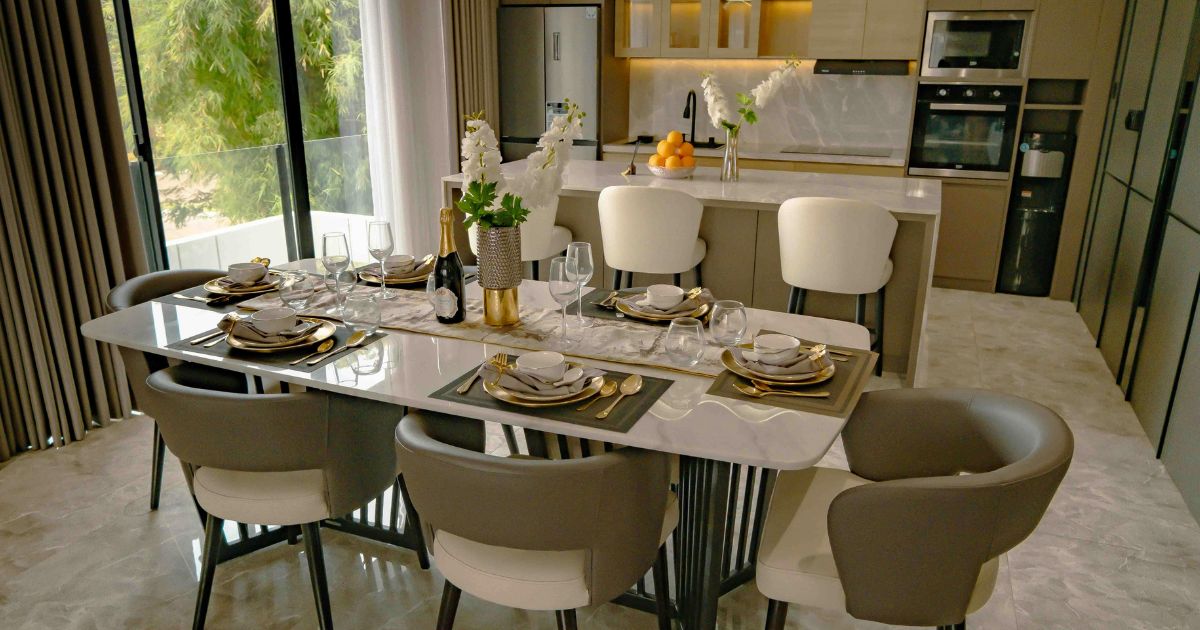
The Set the Stage Franchise operates in the home staging and furnishings space—helping prepare properties for sale (and in many cases, furnishing other types of residential properties such as model homes and short-term rentals). In plain language: the brand’s “core job” is making a property look better so buyers can imagine living there, which can support faster sales and stronger offers for sellers and agents.
In franchising terms, this is an “asset-driven” model. The company itself uses that phrase, and it matters because staging (at scale) requires physical inventory—furniture, décor, and logistics to deliver, install, and remove it on schedule. That physical layer can be a differentiator, but it also adds operational complexity compared to service businesses that don’t rely on inventory-heavy execution.
On brand history: a feature story in reports that the founders, Courtney Clark and Lisa Wheat, bought a staging company in 2016 and later built systems intended to scale—eventually beginning franchising in 2022. That same report describes the business as more than “just stagers,” leaning into furniture sales relationships and vendor access as part of the model.
For growth milestones, Set the Stage’s own “Our Story” timeline reports 37 locations in 2024, up from 10 locations in 2023, and notes awards from the Franchise Brokers Association in both years. While you should always verify “location” definitions (territories sold vs. operating units) in the Franchise Disclosure Document (FDD), the timeline does show rapid expansion momentum by the company’s own reporting.
What Franchisees Get
At the customer-facing level, the brand promotes multiple service lines: home staging, furniture and décor sales, design consultations, and wholesale furniture access. Not every franchise opportunity has multiple revenue categories, so this “stacked” model is worth understanding—especially because a franchisee may need workflows for both services (staging/design) and product sales (furnishings).
On execution, the brand’s staging materials describe a “five-step process” that includes onsite consultation, design and selection, delivery/setup for a photography-ready listing, and removal after the home sells. That implies the business is not purely “consulting”—it’s operational, calendar-driven, and logistics-dependent.
The company also highlights wholesale buying power and a “robust buying network” for furniture and décor. Practically, this can matter in two ways: (1) improving your margin on furnishings, and (2) creating a more consistent “look” across jobs if you have preferred vendor lines.
For a franchise buyer who wants to understand support specifics, third-party franchise listings can add detail. For example, an IFPG listing describes franchisor support as including help with warehouse location selection, warehouse setup and inventory flow, hiring movers/team members, marketing and sales appointment setup, and use of a proprietary app—along with training programs and a comprehensive operations manual. (Treat this as a summary and confirm details inside the current FDD you receive.)
Startup Costs and Ongoing Fees
When evaluating the Set the Stage Franchise, it helps to separate three layers of cost information:
First: the brand’s public marketing page lists a franchise fee of $59,500, a royalty fee of 6%, and a marketing fee of 2%. It also shows a broad “investment range” of $159,000–$275,000, which likely reflects real-world variation by market and buildout needs.
Second: summaries of the FDD show a tighter initial investment range. A 2024 FDD summary posted by lists total initial investment as $169,700–$178,700, and notes that this includes $158,500 in initial fees paid to the franchisor plus a $10,000 grand opening support fee.
Third: a 2023 FDD summary breaks out the asset-heavy nature of the model more clearly. That summary lists total initial investment as $164,500–$174,500 and explains that it includes the $59,500 franchise fee plus an $85,000 “starter package” of furnishings, marketing materials, and equipment that must be paid to the franchisor.
Ongoing fees matter just as much as startup costs. A widely cited FDD-based breakdown (via Franchise Chatter) states the royalty is 6% of gross revenues (with minimum royalty requirements) and the advertising/promotional fee is up to 2% of annual gross revenues (at the franchisor’s discretion).
Finally, don’t skip the “earnings claims” question. Under Item 19 of an FDD, franchisors may provide financial performance representations, but they are not required to do so. If they do, the claims must be included in Item 19 and have a stated basis. This is where you should look for apples-to-apples benchmarks (and definitions of “revenue,” “gross,” or “net”).
How the Industry Itself Compares
Set the Stage Franchise Industry Advantages
Home staging and furnishing sits close to the real estate transaction ecosystem—agents, sellers, builders, investors, and sometimes short-term rental owners. That proximity can create strong referral flywheels when relationships are established, because the same agents sell multiple homes and can repeatedly refer staging partners they trust.
The underlying “why staging exists” is also supported by industry research. The reports that staging can influence buyer perception (for example, making it easier for buyers to visualize the home) and that many agents see staging as affecting outcomes for at least some buyers. That kind of validation matters when you’re selling a service that some consumers still view as “optional.”
There’s also a practical “unit economics” advantage in a dual revenue model. Based on one Item 19 disclosure reported in a 2023 FDD analysis, the brand’s company-owned outlet generated revenue from both staging services and furniture sales—suggesting the business can generate income by delivering the staging service and then monetizing the furnishings side as buyers or clients purchase products.
The most important “fit” advantage is personal: the model can appeal strongly to operators who enjoy creative decision-making, visual design, and relationship-based selling. For the right buyer, the day-to-day can feel more energizing than operationally repetitive service work.
Compared to Commercial Cleaning Industry
Home staging is real, valuable work—but it’s also structurally tied to housing market activity. When transaction volume slows, marketing budgets tighten, or inventory sits, staging may still be used, but the addressable opportunity can become more competitive and more price-sensitive. For context, NAR’s December 2025 existing-home sales release described 2025 as “another tough year for homebuyers,” citing record-high prices and historically low sales—before noting improvement later in the year. That illustrates the cycle risk that real estate-adjacent businesses must manage.
Commercial cleaning is exposed to economic cycles too, but it has a different demand structure: offices, medical facilities, schools, warehouses, and other commercial spaces still need cleaning to operate. Market sizing also tends to be much larger. The U.S. Janitorial Services market size is estimated to be around $110 billion in 2025 (and higher in 2026), supporting the “$100B+ market” claim often cited for the category.
Just as importantly, IBISWorld describes commercial cleaning as the largest segment within janitorial services and indicates commercial customers make up the majority of industry revenue (it cites commercial cleaning customers as over 80% of revenue). That’s a meaningful structural difference: you are selling into B2B budgets, not relying primarily on one-off homeowner decisions.
The other major difference is revenue quality. Commercial cleaning commonly runs on recurring schedules (nightly, weekly, multiple times per week) and contract-based scopes. Even a “simple” year-long contract can create predictable monthly billing that is easier to forecast, staff, and scale than project-based work.
Trade coverage also emphasizes recession resilience strategies in commercial cleaning—such as building recurring contract bases, diversifying customer sectors, and maintaining operational accountability. The point isn’t that cleaning is magically immune to downturns; the point is that recurring contracts and diverse client mixes can reduce volatility compared to industries driven by discretionary spending cycles.
Operationally, home staging requires you to manage physical inventory and logistics at a high standard because the product is visible. Your furniture needs to look good, match current trends, remain in good condition over time, and move efficiently from job to job. In contrast, commercial cleaning can scale with comparatively limited equipment and without tying up capital in large furnishing packages. The Set the Stage Franchise itself makes the “asset-driven” nature of its model explicit, including required startup purchases of furnishings/equipment in its FDD summaries.
This is where the commercial cleaning argument becomes very practical for corporate professionals leaving careers: it tends to offer a simpler operational loop (sell contracts → deploy crews → maintain quality → retain clients → expand account base). And when the model is structured around commercial accounts, it can be less emotionally driven than consumer home services—because facilities budgets are planned, service frequency is systematic, and churn is often lower when performance is consistent.
That doesn’t mean Set the Stage is a “bad” opportunity. It means it’s a different type of business. The home staging path may reward design-minded operators who want to be closer to the creative output and who are comfortable with inventory management and real estate cycles. Commercial cleaning tends to reward operators who want long-term stability, recurring revenue, and scalable systems with fewer moving parts.
How the Assett Franchise Compares
Simpler Systems, Bigger Potential
Assett Franchise sits in the commercial cleaning category, which matters because you’re selling a service that businesses need repeatedly, not once. Assett positions its model around recurring income, scalability, and building a professional operation rather than “buying yourself a job.” It uses language like “proven $1,000,000+” model and frames the opportunity as executive ownership rather than hands-on janitorial labor.
For a buyer who is leaving a corporate career, an executive-style operating model is often the real “make or break” feature. Assett describes its system as designed for business owners to develop client relationships and manage operations while a cleaning team performs the work. That is a fundamentally different day-to-day than a concept that requires you to be physically present on installs, moving inventory, or personally managing a creative production process.
Assett also publishes performance-oriented statements (for example, referencing seven-figure revenue potential and reporting an “average territory” revenue figure for 2024 in one comparison article). As with any franchise, you would still confirm definitions, assumptions, and what “average” includes inside the FDD and validation calls—but the business model is structurally built around stacking recurring contracts, which is typically a cleaner path to compounding growth than project-based sales.
Automated Hiring = Time and Money Saved
In service businesses, hiring is often the bottleneck—not demand. Assett leans hard into solving that bottleneck through an “Automated Hiring System.” In one published breakdown, Assett claims the system saves owners 20–30 hours per week of management time by streamlining recruiting and reducing hiring oversight to roughly 2–5 hours weekly. Those are big claims, but they are presented as part of Assett’s differentiation and are repeatedly emphasized across its marketing comparisons.
Why does that matter when comparing against a staging-and-furnishings franchise? Because the Set the Stage Franchise model is inherently logistics-heavy—moving, setup, removal, and inventory organization. Even if you hire it out, the operation still has many time-sensitive moving parts. Assett’s pitch is that cleaning can become relatively light-touch for an executive owner once hiring and staffing consistency is systematized.
Assett also positions semi-absentee ownership as a design goal. For example, one Assett comparison article states that the business can be run semi-absentee with as little as ~5 hours per week once systems are in place. Even if you treat that as an aspirational benchmark rather than a guarantee, it’s a meaningful contrast to models that require the owner to be heavily involved for years before delegation is realistic.
Personalized and Founder-Led
One additional trust lever for franchise buyers is: who is actually behind the system, and how accessible is leadership? Assett positions itself as family-owned and founder-led, and states that founder/CEO Matt Pencarinha remains actively involved in training new owners and supporting the system, as stated in bizbuysell.com. For buyers who don’t want a private-equity managed experience, that can matter.
Assett’s public materials also describe direct support assets like training, workshops, a knowledge base, one-on-one coaching, and a franchise community network—support elements that are often critical for first-time entrepreneurs transitioning out of a career and into ownership.
The practical takeaway is this: while Set the Stage Franchise may offer a compelling brand and a creative operating environment, Assett is intentionally engineered for “executive ownership” in a large B2B market—where recurring revenue, standardized processes, and low operational drama tend to be easier to systematize at scale.
Final Thoughts
The Set the Stage Franchise has real strengths for the right buyer. It operates in a category that many real estate professionals and agents recognize as valuable, it offers multiple revenue streams (staging plus furnishings), and it has shown rapid expansion claims across public timelines and third-party franchise listings. If you are energized by creative work, enjoy relationship-based selling, and are comfortable managing physical inventory and logistics, it may be worth serious exploration.
But if your goal is a scalable, stable business with lower operational complexity, more predictable recurring revenue, and a clearer path to semi-absentee ownership, commercial cleaning tends to win the comparison on fundamentals—market size, contract stability, and the ability to scale without tying up capital in inventory-heavy assets.
This is exactly why Assett Franchise is positioned as a better fit for career-leavers who want minimal risk, faster operational leverage, and a modern model built for executive ownership—supported by systems like automated hiring, and a founder-led support culture.
“If you’re exploring franchise opportunities and want a model that can deliver long-term income, flexibility, and control — we’d love to show you how Assett Franchise can help you build a business that works for your life. Visit https://assettfranchise.com to connect with our team and learn more.”