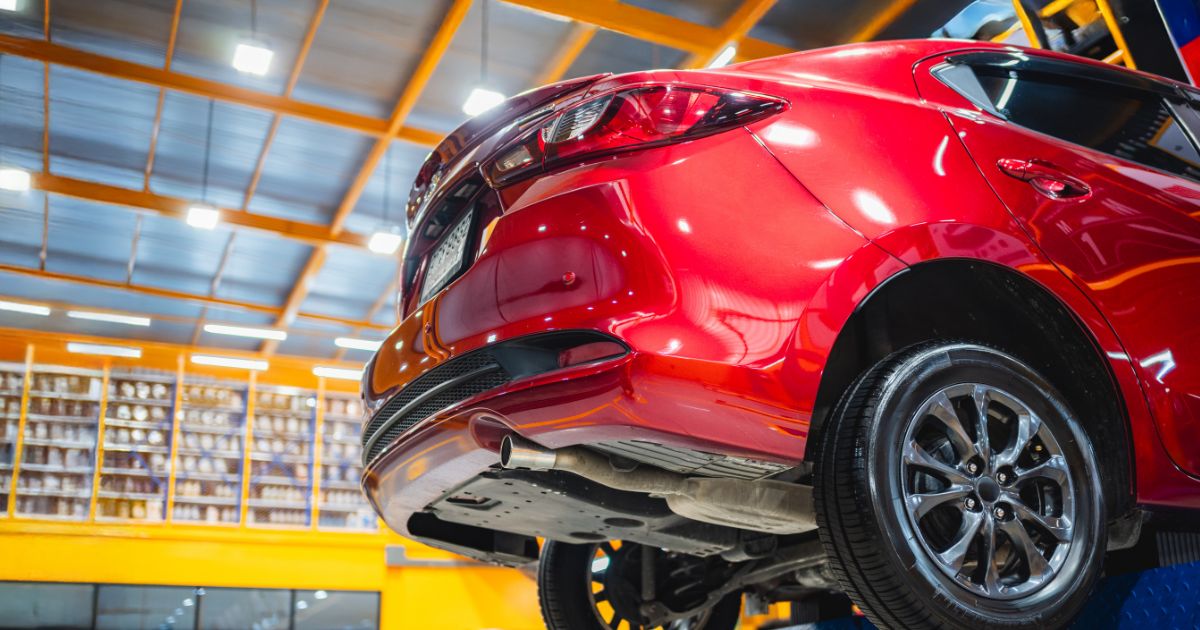
Company Overview and Industry
Christian Brothers Automotive is a franchise auto repair chain that provides full-service vehicle maintenance and repair. The company was founded in 1982 by Mark Carr in a small Houston neighborhood. Carr – who had no prior automotive experience – started the business on the principle of offering honest, neighborly car service grounded in Christian values. The concept proved successful, and after operating independently for over a decade, Christian Brothers Automotive began franchising in 1994.
Fast forward to today, and the franchise has grown to over 280 locations across the United States (operating in more than 30 states). The brand has earned recognition in the franchise world, even appearing on Entrepreneur’s Franchise 500 list. Its growth reflects the strength of the automotive repair industry: the auto care sector is a massive and resilient market, with millions of vehicles on the road that need ongoing maintenance and repair. In fact, Christian Brothers Automotive franchise locations each generate about $2.8 million in average annual sales, thanks to the steady demand for car care. Franchisees benefit from this high revenue potential – the franchisor’s 2024 disclosure documents reported an average owner’s benefit (income to the owner) of roughly $333,000 per store per year, with top operators earning well above half a million annually. These numbers underscore the profit potential of the model, though of course individual results vary.
Equally important, Christian Brothers Automotive differentiates itself with a strong values-driven approach in an industry where trust is often lacking. Their motto is to “Love your neighbor as yourself,” which translates into treating customers (often referred to as “guests”) with honesty, transparency, and respect. Every location features a clean, comfortable waiting area and a friendly, no-pressure atmosphere – the founder famously made a list of 25 things people dislike about getting their car serviced and set out to fix them. Unusually for auto repair businesses, Christian Brothers locations are closed on weekends, operating only Monday through Friday. This policy not only appeals to customers’ convenience (they provide a free shuttle to take customers to and from work on weekdays), but it also gives franchise owners and employees coveted weekends off – a family-friendly perk in the automotive world.
Overall, Christian Brothers Automotive sits in the automotive repair industry, which is a large, essential service sector. Americans are keeping their cars longer than ever (the average vehicle on U.S. roads is over 12 years old), meaning car maintenance is an ongoing need in all economic climates. For someone interested in cars or a mission-driven business that serves practically every adult with a vehicle, this franchise offers a chance to step into a well-established brand with decades of operating history and a solid reputation for integrity.
What Franchisees Get
When you invest in a Christian Brothers Automotive franchise, you’re getting a turn-key auto service business with a comprehensive support system. Franchisees receive extensive training before opening – you don’t need to be a mechanic or have automotive experience (Mark Carr himself started with none). The franchisor provides education in both automotive technical knowledge and business operations, covering how to hire qualified technicians, manage inventory/parts ordering, use their software systems, and deliver the signature customer service that the brand is known for. Ongoing support is available as well, including field consultants and mentorship from the Christian Brothers corporate team.
In terms of services, Christian Brothers Automotive locations offer a wide range of car care and repair solutions. These include routine maintenance like oil & filter changes and tire rotations, repair services such as brake work, engine diagnostics, alignments, A/C repairs, and more. Essentially, a franchisee can serve as a one-stop shop for most automotive needs (apart from body shop work). Many locations also cater to fleet services for local businesses, adding a B2B revenue stream in addition to individual consumer customers. Every franchise offers the company’s “Nice Difference” warranty (3-year/36,000 miles) on repairs and provides amenities like complimentary shuttle service and courtesy vehicle inspections. These value-add services help franchisees attract and retain customers in their communities.
The customer base for a Christian Brothers Automotive franchise is primarily residential consumers – everyday drivers who need trustworthy car maintenance. This means franchisees are building relationships with individuals and families in their area, often earning repeat business as loyal customers return for regular service or repairs over the years. While business is largely consumer-facing, those fleet accounts (servicing vehicles for companies, churches, schools, etc.) can also contribute steady income. Christian Brothers positions its franchisees to compete effectively by emphasizing a courteous, neighborly service experience rather than the stereotypical greasy, high-pressure auto shop. As an owner, you benefit from this branding and operational playbook that has been refined for decades.
In practice, franchisees focus on managing the business and team, not fixing cars themselves. A typical Christian Brothers Automotive franchise will have a staff that includes ASE-certified technicians (mechanics) and service advisors who interact with customers. The franchise owner often acts as a general manager or hires a manager – ensuring quality service, handling local marketing and community outreach, and maintaining business finances. With the support systems, tools, and training provided by the franchisor, first-time owners can learn to navigate everything from choosing the right location to delivering excellent service. The company’s support center assists with things like marketing campaigns, operational benchmarks, and continuous training updates (especially as cars evolve with new technology). In short, franchisees get a proven business model in a necessary industry, along with the backing of an experienced franchisor that wants them to succeed.
Startup Costs and Ongoing Fees
Launching a Christian Brothers Automotive franchise requires a significant upfront investment, in line with what you’d expect for an automotive service center. According to the company’s franchise disclosure, the initial investment ranges from about $454,250 to $582,400 to open a new Christian Brothers Automotive shop. This includes all the costs to build out a facility, buy equipment, initial inventory, training, and working capital. Notably, the initial franchise fee is $135,000, which is on the higher end of franchise fees – though the company allows qualified candidates to finance a portion of that fee. In fact, new franchisees are only required to put $85,000 down toward the franchise fee, and the remaining $50,000 can be rolled into an SBA startup loan. The franchisor looks for candidates with a minimum net worth of $250,000 and sufficient liquid assets to cover that initial cash requirement.
The major expenses in this franchise model include constructing or outfitting the auto shop and purchasing equipment. A Christian Brothers location typically features a purpose-built facility with multiple service bays, lifts, diagnostic machines, and a customer lobby. The company actually helps franchisees with real estate and construction – in many cases, Christian Brothers Automotive handles the land purchase and building development, then leases the location to the franchisee (which is part of why their model uses a unique profit-sharing royalty structure). In the Item 7 breakdown of their 2024 FDD, the cost for equipment, furniture, and software alone is estimated at $255,000–$280,000. There’s also an initial requirement to purchase a shuttle vehicle (around $30k-$50k) to offer customers rides. Given these needs, most franchisees finance the bulk of the investment – the company notes that a 10-year SBA loan can cover ~82–83% of startup costs on average, meaning an owner might only need to inject roughly 15-18% in cash.
Christian Brothers Automotive also has ongoing fees that work a bit differently than many franchises. Instead of charging a typical royalty (like 6-8% of gross sales), Christian Brothers uses a “split profit” royalty model – essentially, the franchisor and franchisee split the location’s profits 50/50 each month. This profit-sharing approach aligns the franchisor’s interests with the franchisee’s bottom line; Christian Brothers only makes money if the franchisee is making money. However, it does mean when your shop is profitable, about half of those profits go back to the franchisor as the royalty fee. In addition, there is a marketing fee for system-wide advertising. The company establishes a national marketing fund that franchisees contribute to, capped at 5% of revenue (and it’s often less). There may also be regional co-op marketing contributions, but again with a defined maximum cost. Other ongoing expenses include typical business costs like insurance, supplies, employee salaries, utilities, etc., which the franchisee covers.
It’s worth noting that while the upfront cost is high, the earning potential is also high – as mentioned earlier, the average Christian Brothers location does over $2.8M in sales annually, and after all expenses and the profit split, the average owner income is around $330k. That suggests many franchisees recoup their investment in just a few years of operation, assuming they run a strong business. Of course, an owner’s actual results will depend on how well they manage costs, attract customers, and maintain quality. Financially, this franchise is a substantial commitment: you’re investing in a brick-and-mortar automotive center with a full staff of skilled technicians. The reward can be a lucrative business, but prospective owners should be prepared for the capital requirements and the operational responsibility that comes with an auto repair franchise.
How the Industry Itself Compares
Now that we’ve covered Christian Brothers Automotive’s offering, let’s compare the automotive repair industry it operates in with the commercial cleaning industry (the field Assett Franchise is in). Both industries involve essential services that people need regularly, but they differ in practical, financial, and operational ways. Below, we’ll break down some advantages of Christian Brothers’ automotive repair industry, and then contrast those with advantages of the commercial cleaning industry. This honest comparison will highlight why many entrepreneurs ultimately find commercial cleaning to be a more stable, scalable, and profitable path for the long run.
Christian Brothers Automotive Industry Advantages
Every industry has its pros and cons. First, here are some advantages of the automotive repair business – particularly as experienced by Christian Brothers Automotive franchise owners:
- Huge, resilient market: Americans rely on their cars, and the auto repair aftermarket is one of the most essential service sectors in the economy. There are billions of dollars spent annually on vehicle maintenance and repairs. As more cars stay on the road longer (average vehicle age is at a record high, ~12.8 years), demand for repair services remains strong even during economic downturns. People may postpone buying a new car in a recession, but they can’t avoid fixing the one they have when it breaks – making auto repair a generally recession-resistant niche.
- High revenue per customer: Automotive repairs often involve substantial transaction sizes. A single customer visit for a brake job, transmission repair, or set of new tires can be hundreds or thousands of dollars in revenue. This means an auto shop can hit high sales volumes with a moderate number of tickets. As mentioned, a typical Christian Brothers franchise generates about $2.8M in annual sales on average. This high average unit volume reflects the fact that each car serviced contributes significant revenue. In comparison, many other service businesses (like some home services or minor B2C services) might have lower per-transaction totals.
- Proven profitability: Not only is top-line revenue strong, but the bottom-line can be attractive too. Christian Brothers Automotive reports that the average franchisee’s owner benefit is around $333,000 per year after all expenses. The top 20% of their franchise locations earned over $600,000 a year for the owner on average. These figures indicate that a well-run auto repair shop can deliver a robust income. For a franchisee, it’s reassuring that the model has a solid track record of financial success. (Keep in mind, these numbers require running a larger operation – including managing technicians and significant overhead – so it’s earned with plenty of effort.)
- Established brand and customer trust: In the automotive industry, trust is paramount – and Christian Brothers Automotive has built a reputation for honest service over 40+ years. The franchise’s faith-based, people-first philosophy (the “Nice Difference”) helps attract loyal customers who return for repeat business. Franchise owners benefit from this positive brand image in their community. Compared to opening an independent auto garage with no name recognition, being part of a respected franchise like CBA gives customers confidence from day one.
- Work-life balance in an auto business: Uniquely, Christian Brothers Automotive franchises do not require weekend hours. The shops operate Monday through Friday, 7am–6pm, and are closed on Saturdays and Sundays. This is almost unheard of among auto repair businesses (most competitors, like dealerships or independent mechanics, have Saturday hours). For franchise owners and their employees, this schedule provides more family and personal time, helping prevent burnout. It’s an industry advantage specific to the Christian Brothers model – you get to be in the auto business without sacrificing all your weekends.
- Comprehensive franchisor support: Within the auto repair sector, Christian Brothers stands out for the support it gives franchisees (beyond what many cleaning franchises or other service brands might offer). From real estate assistance (they often handle building your facility) to robust training in a field that can be technical, they lower the barriers to entry. No automotive experience is required to join – they help you learn the business from the ground up. Additionally, the franchisor’s profit-sharing royalty means they are highly motivated to coach franchisees toward profitability. This support structure can make succeeding in the complex auto industry much more attainable for newcomers.
In summary, the automotive repair industry offers strong sales potential and resilience, and Christian Brothers Automotive in particular has optimized the model with a trusted brand and supportive infrastructure. If you’re comfortable managing a facility with expensive equipment and skilled staff, and you appreciate the tangible nature of fixing cars, it can be a rewarding business. However, it’s also worth examining how this compares to the commercial cleaning industry – which offers a very different approach to building a $1M+ business.
Compared to Commercial Cleaning Industry
The commercial cleaning industry is quite different from automotive repair, and it comes with its own compelling advantages. In fact, for entrepreneurs focused on long-term stability, scalability, and simplicity, commercial cleaning often outshines other service industries. Let’s look at how commercial cleaning (and franchises like Assett) stacks up against many of the challenges that other sectors face:
- Massive, essential market: Commercial cleaning is a $100+ billion industry and growing, serving virtually every type of commercial building – offices, schools, medical facilities, retail stores, warehouses, and more. Cleaning services are considered essential for health and safety, so demand stays consistent regardless of economic conditions. Even during recessions or unexpected events, businesses and institutions must maintain cleanliness and hygiene. (For example, during the COVID-19 pandemic, cleaning and sanitization services became more critical than ever.) This essential nature makes commercial cleaning highly recession-resistant – it’s hard for companies to cut cleaning completely, even when tightening budgets.
- Predictable recurring revenue: Unlike the automotive business where each customer decides when to come in (often only when something breaks), commercial cleaning operates on long-term contracts. Clients typically sign agreements for cleaning services (e.g. a company might contract for cleaning their office 3 times a week for a year). This means cleaning franchise owners enjoy a predictable, recurring revenue stream month after month. B2B contracts lock in steady cash flow and reduce the volatility in income. You’re not waiting and wondering if customers will show up each day; you know how many buildings you’re cleaning and how much revenue that generates. Over time, as you add more contracts, your revenue can scale in a very reliable way. This contrasts with many consumer service businesses (auto repair included) that depend on one-off transactions and constant marketing to attract individuals. The recurring nature of a cleaning business franchise is akin to building an annuity – accounts often renew year over year if service is good, providing long-term income stability.
- Low cost of entry, high scalability: A commercial cleaning franchise generally has a much lower startup cost than an automotive franchise or other brick-and-mortar service businesses. You don’t need to build a facility or buy heavy equipment. Cleaning businesses can often be home-based or require only a small office storage space. The overhead costs are relatively low – the equipment mostly consists of cleaning supplies, vacuums, mops, etc., which are inexpensive. There’s no need for specialized machinery or a retail storefront. This makes it easier and faster to get started and also means lower financial risk. Additionally, because you’re not tied to a fixed location’s capacity, scaling up is straightforward: you can add new client accounts and deploy more cleaning crews without a huge new capital investment. In an automotive franchise, if you want to grow beyond your bay capacity, you might need to expand your facility or open another location (both very costly); in cleaning, you might just need to buy a few more vacuum cleaners and hire a couple more staff as you expand. The flexibility and low incremental cost of growth in cleaning is a major advantage for reaching that $1M+ revenue mark – you can scale your business by adding contracts continuously, without the bottleneck of a physical shop’s throughput.
- Semi-absentee ownership potential: Commercial cleaning is one of the industries where semi-absentee ownership is quite feasible. Many cleaning business franchise owners operate more as executives – handling client relationships and business development – while delegating the actual cleaning work to trained crews. Because cleaning typically happens during off-peak hours (e.g. evenings or early mornings in offices) and does not require the owner to be on-site for every job, an owner can manage scheduling, sales, and hiring in far fewer than 40 hours a week. Assett Franchise, for example, is built for owners who want to work on the business, not in it, and some owners run their franchise in as little as 5 hours per week (once established with a team). This flexibility and work-life balance is a stark contrast to many other franchises where the owner needs to be fully involved day-to-day or tied to business hours. While Christian Brothers Automotive also allows hiring a manager, the nature of an auto repair shop often demands close oversight, technical consultations, and on-site presence to ensure quality and customer service during all operating hours. Cleaning franchises offer a more hands-off management style – ideal if you want to keep your day job initially or simply desire more free time as the business grows.
- Simpler operations (no technical expertise needed): Running a commercial cleaning business is relatively straightforward compared to something like automotive repair or other technical trades. You’re providing a routine service that doesn’t involve complex diagnostics or highly specialized skills. You don’t need any prior industry experience to start – franchisors like Assett provide a complete playbook and training on how to run the business. Your employees don’t need professional licenses (unlike mechanics, electricians, etc.); cleaners can be trained quickly on standard procedures. There are also fewer variables and emergencies – for instance, in auto repair, a car might have an unexpected problem that requires creative mechanical troubleshooting, whereas cleaning an office building is a more standardized task each time. This simplicity means fewer surprises and fires to put out in day-to-day operations. First-time entrepreneurs often find a cleaning business franchise easier to grasp and manage than other complex service businesses.
- Minimal equipment and no heavy facilities: As mentioned, a cleaning franchise does not require large capital equipment – no hydraulic lifts, no specialized trucks, no inventory of parts. This eliminates a lot of ongoing headaches and costs (maintenance of equipment, depreciation, etc.). You also don’t need to lease prime commercial real estate; your clients’ buildings are your workplace. Most cleaning work is done on the client’s site, so you save on rent and utilities that brick-and-mortar businesses must pay. With fewer fixed costs, cleaning franchises can maintain better margins and weather economic ups and downs more easily. Additionally, without a public storefront, you’re less exposed to fluctuations in walk-in traffic or seasonal footfall. The cleaning business growth is driven by B2B sales and contracts, not location, so you can expand geographically by taking on accounts anywhere in your metro area.
- Recurring, predictable demand from diverse clients: Commercial cleaning serves a broad range of industries – from corporate offices and schools to hospitals, retail chains, and industrial facilities. This diversity means your business is not overly dependent on any single client type. There’s also no seasonality in commercial cleaning: office buildings need cleaning year-round, and in fact certain times (like flu season or after pandemic waves) they may even increase frequency. Compare this to some other service industries that suffer seasonality (e.g., lawn care slows in winter, pest control spikes in summer, even auto repair can have seasonal patterns like more A/C fixes in summer and battery replacements in winter). Cleaning contracts provide a steady drumbeat of work across all seasons. And because cleanliness and sanitation standards have risen overall, businesses are unlikely to drastically cut back on cleaning services – doing so would risk health code issues or employee/customer dissatisfaction. All of this translates to a very steady, predictable business model for franchise owners. You can plan revenues and staffing far ahead with confidence, based on signed contracts.
- Ideal for first-time entrepreneurs: Many people who transition from corporate careers to business ownership choose commercial cleaning because it checks a lot of boxes for a lower-risk, high-upside venture. The model is proven and simple – it’s essentially about great customer service, reliability, and quality control, rather than mastering a technical craft. The executive model of operation (where you manage the business but aren’t personally doing the cleaning each night) means you can focus on growth and working on the business. Cleaning franchises also often have communities of owners and support networks where you can learn from others. For someone new to entrepreneurship, it’s a straightforward concept (everyone understands what cleaning a building entails) with plenty of guidance available. Contrast that with, say, an automotive or restaurant franchise where there might be a steeper learning curve, more regulatory compliance, or complex supply chains – cleaning keeps things relatively low-complexity.
In short, the commercial cleaning industry offers recurring revenue, scalability, low costs, and resilience that address many pain points other industries face. Assett Franchise leverages all these industry advantages, which is why we position commercial cleaning as a “cleaner” alternative (pun intended) for franchise investors seeking growth with stability. Now, let’s see how Assett specifically compares as a franchise opportunity.
How the Assett Franchise Compares
Having examined Christian Brothers Automotive and the auto vs. cleaning industries, let’s turn to Assett Franchise itself. Assett is a commercial cleaning business franchise designed for aspiring business owners who want a scalable, semi-absentee operation. Here’s how Assett Franchise compares and why it might be a better fit for someone looking to build a $1M+ recurring revenue business with less complexity:
Simpler Systems, Bigger Potential
Assett Franchise is built on the foundation of the commercial cleaning industry’s advantages discussed above – a recession-resistant market, recurring B2B income, and low overhead. This means from day one, an Assett franchisee is tapping into a stable demand (businesses will always need cleaning) and a model that can grow steadily without major capital barriers. Assett’s business systems are intentionally kept simple so that franchise owners can focus on scaling up revenue, not troubleshooting complicated operations.
Crucially, Assett is designed for owners who want to work on the business, not in it. In other words, you are stepping into the role of CEO or growth strategist, rather than a “janitor in chief.” The franchise model encourages you to spend your time securing contracts, managing client relationships, and overseeing quality – the high-level tasks that grow the business – instead of physically doing cleaning tasks each night. By contrast, many small business owners (and even some franchise owners in other systems) get sucked into day-to-day labor due to poor systems. Assett avoids that trap by providing a full playbook and tools to run the operation smoothly. Everything from how to quote jobs, how to schedule and route cleaning crews, to how to manage finances is documented and supported so you can quickly learn to lead the business. No prior cleaning industry experience is required; Assett trains you on the industry basics and their proven processes.
The income potential with Assett is substantial, while requiring a lower investment than an auto repair franchise. Hitting $1M+ in annual recurring revenue is an achievable target with Assett’s model – and because of the contract-based revenue, that million-dollar mark can be sustained year after year (rather than starting from zero every month). With far less overhead, more flexible scheduling, and an unlimited territory of potential clients, Assett Franchise gives you a platform to build a large business that isn’t capped by the size of a building or the hours in a workday. Essentially, it’s a simpler business that can become very big. You’re not juggling dozens of moving parts; you’re replicating a straightforward service across many clients. For an owner who wants a growth path to a high revenue, high margin business without needing specialized technical skills or massive capital, Assett offers that route.
Automated Hiring = Time and Money Saved
One of Assett Franchise’s standout features is its automated hiring system – a game-changer in the service business world. Ask any small business owner their biggest headache, and many will say “finding and keeping good employees.” This is especially true in industries like cleaning, which can have high turnover, and in technical fields like auto repair, which face skilled labor shortages. Assett recognized that solving the hiring challenge would give their franchisees a huge edge, so they developed an automated system to do just that.
So, what is this system? In simple terms, Assett leverages technology and refined processes to continuously recruit, screen, and onboard cleaning staff with minimal manual effort from the franchisee. The system uses automation to post job listings, filter applicants, schedule interviews, and even handle initial training modules for new hires. Instead of a franchise owner having to spend hours every week posting ads, calling candidates, and processing paperwork, the automated system takes care of the heavy lifting. The result: Assett owners save an estimated 20–30 hours per week that would have otherwise been spent on HR tasks. This is time they can reinvest into building client relationships, doing sales visits to win new accounts, or simply enjoying more free time.
Not only does this system save time, but it also saves the cost of having to hire a full-time hiring manager or recruiter as you scale. In a typical service business, once you reach a certain size, you might need a dedicated HR person to keep up with staffing. Assett’s model delays or even eliminates that need, which can save tens of thousands of dollars in salary. Furthermore, because the hiring process is automated and always running in the background, you maintain a pipeline of qualified candidates. That means even as you grow or if you have turnover, you can fill positions quickly and avoid disruptions in service. This ensures you always have a high-quality workforce ready to deploy, which in turn keeps clients happy with consistent service standards.
From a franchisee’s perspective, this automated hiring is a huge quality-of-life improvement. It tackles one of the hardest parts of running any service business. Think about Christian Brothers Automotive owners – they have to find skilled mechanics and service advisors, often competing with dealerships and other shops for talent. Many hours and dollars go into recruiting and retaining those specialists. Assett Franchise owners, on the other hand, have a much larger labor pool to draw from (since almost anyone can be trained to perform commercial cleaning) and a system that does the recruiting work for them. It’s a modern, efficient approach to staffing that helps Assett owners scale their businesses faster and with fewer headaches. In short, Assett’s automated hiring saves you time, saves you money, and gives you peace of mind that your business can grow without being limited by labor constraints.
Personalized and Founder-Led
Another area where Assett Franchise shines is in its personal touch and leadership accessibility. Assett is a family-owned franchise company, led by its founder Matt Pencarinha and a close-knit leadership team, as stated in bizbuysell.com. This is notably different from many large franchise chains that might be owned by private equity firms or large corporations. For franchisees, Assett’s ownership structure and culture translate into a very personalized support experience.
When you join Assett, you’re not just franchisee #205 in a giant system – you become part of a smaller community where the founder likely knows you by name. Franchisees have direct access to leadership for guidance, ideas, and problem-solving. Matt Pencarinha and his team are hands-on in mentoring new owners, because they genuinely care about each franchise’s success. This can be incredibly reassuring for first-time business owners. If you encounter a challenge or have a question, you can pick up the phone and talk to the people who designed the business model, not just a call-center representative. The level of mentorship and responsiveness is akin to having a business partner by your side, rather than feeling like you’re on your own.
Assett’s culture is also community-focused and mission-driven. Being founder-led means the company can stay true to its core values without outside investor pressure. In practice, that means Assett is selective about franchisee growth, ensuring they bring in owners who align with the mission of providing excellent service and improving local communities. The support team works closely with franchisees to uphold quality and customer satisfaction, rather than just chasing rapid expansion. For someone evaluating franchise opportunities, this distinction matters: you want a franchisor that’s as invested in your success as you are. Assett’s family-style franchising offers exactly that – a partnership mentality where your input is valued and your business goals are supported by people who’ve been in your shoes.
In contrast, larger franchise systems (even Christian Brothers Automotive, with nearly 300 locations) inevitably become a bit more corporate as they scale. They may have excellent support, but it’s more standardized and less personalized. Franchise owners in those systems might not ever meet the CEO or founder, and decisions might be driven by investors looking at quarterly results. With Assett, you’re joining a franchise where the founder is directly involved and the success of each franchisee is a top priority for the entire team. For many entrepreneurs, this means a better franchising experience – you feel heard, you can influence the direction of the franchise system, and you’re part of a tight-knit family rather than a vast franchise empire.
Final Thoughts
Both Christian Brothers Automotive and Assett Franchise offer viable paths to business ownership, but they cater to different interests and investor profiles. Christian Brothers Automotive is a strong franchise for the right type of buyer – if you love cars or value a faith-based consumer service model, and you’re prepared for a high-investment, hands-on operation, it’s undoubtedly a proven opportunity in automotive repair. The franchise has solid earnings and a respected brand, which can be very rewarding for owners who fit that mold.
However, if you’re someone who prioritizes scalability, stability, and simplicity in your business venture, the Assett Franchise offers more advantages. With Assett, you get a scalable, stable business that can grow through recurring B2B contracts. You avoid much of the operational complexity and heavy overhead that come with other industries. You build predictable recurring revenue in an essential service, which lowers risk and can lead to a faster ROI. And you operate a modern business model built for executive ownership – meaning you can achieve long-term income and growth without sacrificing your flexibility or work-life balance.
Ultimately, the best franchise opportunity is one that fits your life and goals. Assett Franchise is ideal for entrepreneurs who want:
- A scalable, stable business with long-term contract revenue.
- Low operational complexity, without the need for specialized facilities or technical expertise.
- Predictable recurring revenue that isn’t subject to major seasonal swings or one-off sales.
- Minimal risk and a faster ROI, thanks to lower startup costs and essential demand.
- An executive ownership model where you can oversee the business (even semi-absentee) rather than grinding in daily operations.
If that checklist resonates with you, then the “cleaner” alternative might indeed be the better choice.
If you’re exploring franchise opportunities and want a model that can deliver long-term income, flexibility, and control — we’d love to show you how Assett Franchise can help you build a business that works for your life. Visit https://assettfranchise.com to connect with our team and learn more.