For professionals looking to leave their careers and buy a franchise, comparing options across completely different industries is normal. One week you’re looking at beauty and lifestyle brands like the Blo Blow Dry Bar Franchise. The next, you’re evaluating more operational, B2B opportunities like commercial cleaning.
At a glance, Blo can look exciting: a polished brand, retail storefronts, and a consumer-facing experience. But when you dig into the economics, operational realities, and scalability, the differences between a blow dry bar franchise and a commercial cleaning franchise become very clear.
This in-depth comparison breaks down what the Blo Blow Dry Bar Franchise actually offers, how the blow dry bar industry performs, and why many serious buyers ultimately decide that a commercial cleaning franchise — specifically Assett Franchise — offers a more stable, scalable, and executive-friendly path to long-term wealth.
What Is the Blo Blow Dry Bar Franchise Opportunity?
Company Overview and Industry
Blo Blow Dry Bar operates in the beauty and personal services industry, specifically focusing on wash-and-style hair services. The brand markets itself as a “no cuts, no color” concept, simplifying the service offering to fast, appointment-based styling.
Blo began franchising in the United States around 2010 and is structured as a retail franchise model requiring leased storefronts in shopping centers or mixed-use retail areas. According to its most recent Franchise Disclosure Document (FDD), the brand ended 2024 with approximately 100 franchised locations in operation, with limited company-owned units.
Recent franchisor press releases indicate continued expansion momentum, including dozens of new franchise agreements awarded in 2025, though these announcements often include both U.S. and international growth, according to PRNewswire.
From a branding perspective, Blo is polished and well-recognized within its niche. From a business perspective, it is firmly rooted in retail, consumer discretionary spending, and licensed labor.
What Franchisees Get
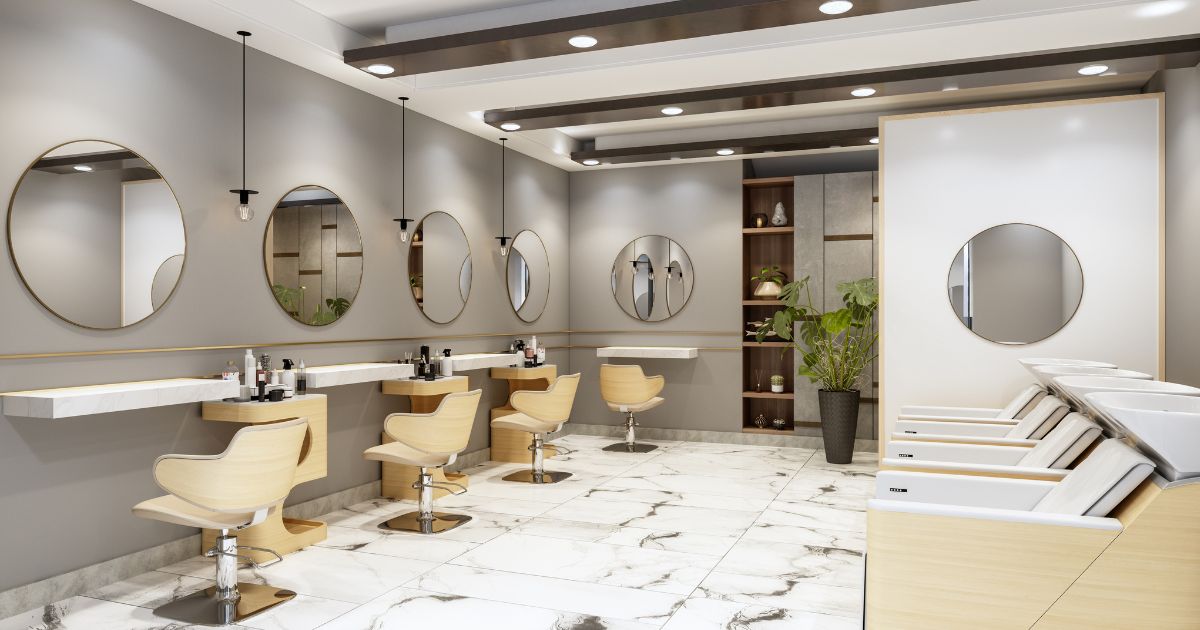
Blo franchisees operate physical storefronts that typically range from 500 to 1,000 square feet, requiring tenant improvements, branded buildouts, furniture, fixtures, signage, and ongoing retail maintenance.
The core services include:
- Blowouts and styling
- Hair washing and conditioning
- Retail product sales
- Optional makeup services where space and local regulations allow
The franchisor provides:
- Initial training at headquarters and onsite
- Brand standards and operating manuals
- Marketing guidance and required advertising programs
- Approved software systems for booking and reporting
Staffing is central to the model. Franchisees must recruit, train, and retain licensed cosmetologists, a requirement that significantly affects labor availability, wage pressure, and turnover. Blo’s own franchise materials emphasize that staff management is a constant operational priority, not a background task.
This immediately places Blo in a hands-on management category, even for owners who intend to hire a manager.
Startup Costs and Ongoing Fees
The Blo Blow Dry Bar Franchise is a capital-intensive retail franchise.
According to the 2025 FDD, the estimated total initial investment ranges from $308,500 to $402,620.
Major cost drivers include:
- Leasehold improvements: $130,000–$180,000
- Furniture, fixtures, and equipment
- Initial inventory
- Grand opening marketing
- Working capital
Ongoing fees include:
- 6% royalty on gross sales
- Advertising fund contribution (2% of gross sales or a minimum monthly amount)
- Brand maintenance and technology fees
- Required local advertising spend, often with designated vendors
Importantly, these fees are charged on gross revenue, not profit — meaning they apply regardless of labor costs, rent increases, or local market challenges.
How the Industry Itself Compares
Blo Blow Dry Bar Industry Advantages
The blow dry bar concept does offer real advantages for certain buyers.
First, it benefits from repeat consumer behavior, especially through memberships. Blo’s Item 19 disclosures include membership counts, and the franchisor actively promotes memberships as a way to stabilize demand.
Second, the beauty industry is large and well-established. The U.S. hair salon industry alone represents tens of billions in annual revenue.
Third, some owners simply prefer consumer-facing brands, retail environments, and lifestyle-oriented businesses.
For the right operator — especially one with prior retail or beauty experience — Blo can be a viable business.
Compared to the Commercial Cleaning Industry
This is where the contrast becomes sharp.
A blow dry bar is a consumer discretionary retail business. Commercial cleaning is a B2B essential service.
Commercial cleaning serves offices, medical facilities, schools, warehouses, and industrial buildings — spaces that must be cleaned regardless of economic cycles. Industry estimates consistently place the U.S. janitorial services market at or above $100 billion annually, with steady long-term demand, as stated in IBISWorld.
Unlike retail beauty services:
- Commercial cleaning contracts are recurring and contractual
- Revenue is tied to facilities, not consumer moods
- Demand is driven by compliance, safety, and operations
- Clients budget for cleaning as a necessity, not a luxury
Labor dynamics also differ. While cleaning requires staffing, it does not require licensed professionals, dramatically expanding the available labor pool compared to cosmetology-based businesses, according to the US Bureau of Labor Statistics.
From a scalability standpoint, commercial cleaning grows by adding contracts — not storefronts. There is no retail buildout, no customer-facing lease dependency, and no foot-traffic risk.
How the Assett Franchise Compares
Simpler Systems, Bigger Potential
Assett Franchise operates entirely within the commercial cleaning industry, but it is specifically designed for owners who want to build a business — not buy themselves a job.
The Assett model focuses on:
- Long-term B2B contracts
- Recurring monthly revenue
- Scalable systems instead of physical locations
- Clear pathways toward $1M+ in recurring revenue
Because cleaning contracts stack over time, growth is cumulative. You don’t reset to zero each month like many retail businesses. One contract builds on the next.
Assett also does not require prior cleaning experience. Franchisees receive a full operational playbook covering sales, onboarding, quality control, and account management.
Automated Hiring = Time and Money Saved
One of the biggest pain points in service businesses is hiring. Blo franchisees must constantly recruit licensed stylists in a competitive labor market, often dealing with turnover, schedule gaps, and rising wage pressure.
Assett approaches this differently.
Assett Franchise has built an automated hiring system designed to remove the owner from day-to-day recruiting. The system continuously sources, screens, and pipelines cleaners, significantly reducing the time owners spend on staffing.
According to Assett’s own materials, this system can save owners 20–30 hours per week compared to traditional hiring models.
This is a structural advantage — not a productivity hack — and it’s one of the main reasons Assett can be operated semi-absentee, often in as little as five hours per week once stabilized.
Personalized and Founder-Led
Another key difference is leadership structure.
Assett Franchise is family-owned and founder-led, not controlled by private equity, as stated in bizbuysell.com. Franchisees have direct access to leadership, including founder Matt Pencarinha, and benefit from hands-on guidance during growth phases.
For first-time entrepreneurs leaving corporate roles, this matters. Many large franchise systems offer scale — but limited access. Assett prioritizes relationship, responsiveness, and long-term franchisee success over rapid unit churn.
Final Thoughts
The Blo Blow Dry Bar Franchise can be a solid option for buyers who:
- Enjoy retail environments
- Are comfortable managing licensed labor
- Want a consumer-facing brand
- Accept higher operational involvement and retail risk
Blo’s Item 19 data shows that top-performing units can exceed $1M in gross sales, but it also shows wide performance variability and significant dependence on execution, location, and staffing.
For buyers whose goals include predictable income, scalability, lower complexity, and executive ownership, a commercial cleaning franchise offers structural advantages that retail beauty simply cannot match.
Assett Franchise stands out within that category by combining:
- A massive, recession-resistant market
- Recurring B2B revenue
- Low cost of entry relative to upside
- Automated hiring systems
- Semi-absentee ownership design
- Founder-led support and guidance
If you’re exploring franchise opportunities and want a model that can deliver long-term income, flexibility, and control — we’d love to show you how Assett Franchise can help you build a business that works for your life. Visit https://assettfranchise.com to connect with our team and learn more.