What Is the A Place At Home Franchise Opportunity?
Company Overview and Industry
A Place At Home is a senior care franchise offering comprehensive in-home care and related services for the elderly. Co-founded in 2012 by childhood friends Dustin Distefano and Jerod Evanich in Omaha, Nebraska, the company was born from their mission to provide better care options for seniors. The brand began franchising in 2017 and has expanded steadily since. As of mid-2025, A Place At Home has grown to around 57 franchise locations nationwide, with plans to reach 75 by year-end. This growth, along with multiple industry awards, highlights A Place At Home’s rising prominence in the senior care sector. In fact, Franchise Business Review named it among the “Most Profitable Franchises” of 2025, a recognition based on strong franchisee satisfaction and income potential.
In summary, A Place At Home operates in the booming senior care industry, serving the needs of an aging population. The franchise’s core values (embodied in its “We are CARE” philosophy – Compassionate, Accountable, Respectful, Ethical) and its community-driven mission position it as a purpose-driven business opportunity within a rapidly growing market.
What Franchisees Get
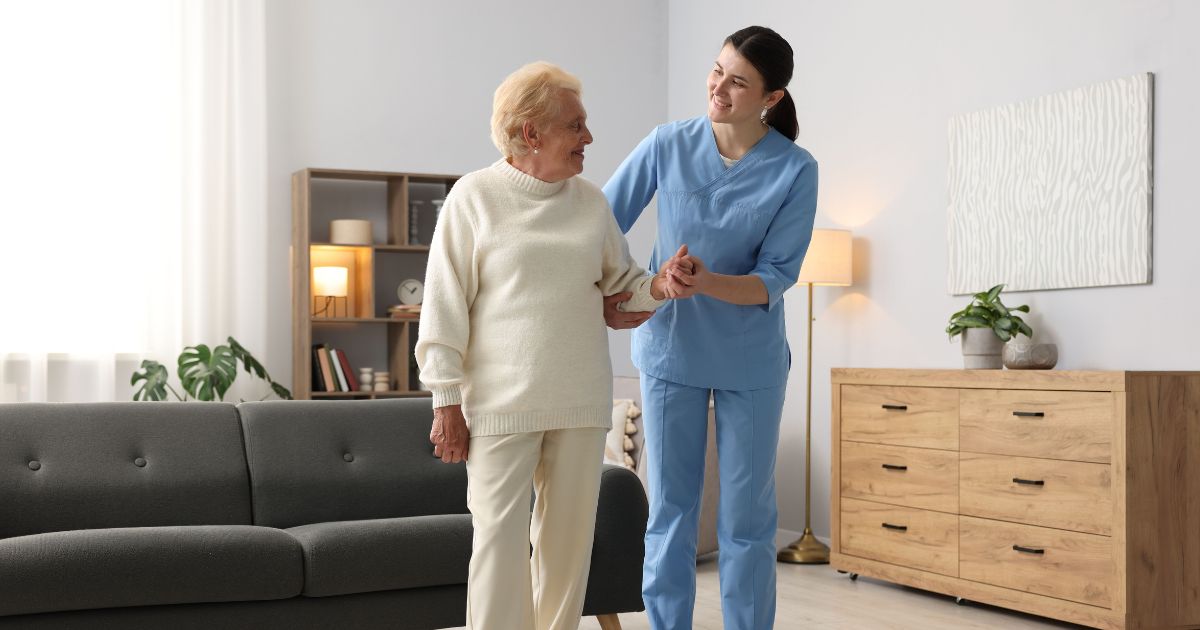
Services Offered: Franchisees of A Place At Home deliver a continuum of senior-focused care services. These include non-medical in-home caregiving (companionship, personal care assistance, meal preparation, etc.), care coordination (helping families manage medical appointments and care plans), senior placement services (assisting seniors in finding and transitioning to assisted living or other facilities), and even staffing solutions for local care facilities. This multi-service model means owners have multiple revenue streams – they aren’t limited to a single service. By being a “one-stop” senior care provider, franchisees can meet various needs of clients as they age, building long-term relationships across a range of services.
Training & Support: New franchise owners benefit from a structured launch and ongoing support system. A Place At Home’s onboarding program, called “CARE Launch,” guides owners from the moment they sign the franchise agreement through their first 90 days of operation. This includes an initial welcome orientation, assistance with any required state home care licensing (which can take 3–6 months in some states), and a blend of virtual and hands-on training. For example, franchisees complete online modules (like CARE Sales and CARE Recruit training) and then attend a week-long, 40-hour in-person training at the Omaha headquarters. By the time they open, owners are well-versed in the company’s care processes, scheduling software, and operational protocols.
Support doesn’t stop at opening. One-on-one coaching is a cornerstone of A Place At Home’s system. New franchisees have weekly coaching calls with the franchisor’s operations team to troubleshoot challenges and stay on track towards growth. The franchise also fosters peer support through monthly roundtable discussions and a Franchisee Advisory Council, creating a collaborative network among owners. On the marketing side, A Place At Home provides in-house marketing assistance to drive both client inquiries and caregiver recruitment – including localized website development, social media campaigns, and a national brand fund that franchisees contribute to (currently 1% of sales). Overall, franchisees receive a full playbook of tools: operational software for scheduling and caregiver management, referral marketing strategies to connect with hospitals and senior centers, and ongoing access to industry experts for advice. The goal is to equip owners to build a relationship-driven business that delivers compassionate service while also being scalable.
Customer Base: A Place At Home franchise owners primarily serve seniors and their families in their local community. Unlike a commercial cleaning business franchise that serves other companies, this is largely a B2C model – your clients are older adults living at home (or their adult children seeking help). These customers typically need reliable, ongoing care to age in place safely. The services can range from a few hours of companionship a week to round-the-clock personal care, depending on the client’s needs. There is also a B2B element: through the placement and staffing services, franchisees build relationships with assisted living facilities, nursing homes, and healthcare providers (for referrals or to supply caregiver staff). However, the heart of the business is working closely with families, often during emotional times. Franchisees become trusted advisors in their community, helping navigate the challenges of senior care. It’s a customer base that values compassion and trust, and A Place At Home emphasizes those qualities in every interaction.
Startup Costs and Ongoing Fees
Initial Investment: One attractive aspect of A Place At Home is its relatively low cost of entry for a franchise in the senior care space. The total initial investment ranges from roughly $90,000 up to $168,000. This amount includes the franchise fee, initial training, launch costs, and working capital to get the business off the ground. A Place At Home’s initial franchise fee is about $49,500 (with discounts available for early investors, veterans, and those with healthcare experience – often 10% off the fee). Compared to many franchises (including some other senior care brands), this investment level qualifies A Place At Home as a “low-cost” franchise opportunity, making it accessible to first-time business owners.
Within that investment, you won’t need heavy equipment or real estate – but you should plan for expenses like setting up a small office (A Place At Home is not a home-based franchise; typically an office is required for licensing and operations), obtaining insurance, marketing your grand opening, and recruiting your initial caregiver team. Notably, if your state requires a home care agency license, there may be licensing fees and a few months of lead time before you can operate – the franchisor assists with this process as part of your startup support.
Ongoing Fees: A Place At Home uses a royalty and marketing fee structure typical of franchises. The ongoing royalty is a percentage of your gross revenue. Royalty starts at around 5% of revenues. Uniquely, the franchise offers a scaled royalty system: as your revenue grows, your royalty percentage can actually drop, which incentivizes high performance. For example, A Place At Home franchisees pay 5% on their base sales, but once a location exceeds $1 million in annual sales, the royalty reduces to 4%, and if sales surpass $1.5 million, it further drops to 3.5%. (Earlier sources indicated a similar tiered royalty structure starting at about 5.5%, so the exact tiers might vary slightly by year, but the principle is that top-performing franchisees are rewarded with lower royalties).
Franchisees also contribute to a national marketing fund, currently 1% of sales (the franchisor notes this could go up to 2% in the future). This fund supports broader brand advertising and resources that benefit all franchise locations. Additionally, owners spend their own budget on local marketing to build relationships with referral partners and attract clients and caregivers (the franchisor guides these efforts). Other ongoing costs include typical business expenses: insurance, payroll for your staff of caregivers, technology subscriptions (for scheduling, etc.), and perhaps rent for your small office. Importantly, A Place At Home is not a semi-absentee franchise – it expects the owner to be actively involved day-to-day. This means you won’t be paying a manager to run everything in your absence at first; instead, you’ll be investing your own time alongside these monetary costs. The trade-off is that with active effort and the franchisor’s support, the business can scale to significant revenues. According to A Place At Home’s Item 19 financial disclosure, the average franchised location achieves about $1.07 million in annual revenue (which is notably higher than the industry average for similar senior care franchises). This suggests that, for franchisees who follow the system and build a solid caregiver team, there is potential to generate seven-figure yearly sales over time.
How the Industry Itself Compares
Choosing a franchise isn’t just about the brand – it’s also about the industry you’ll be operating in. A Place At Home competes in the senior care industry, while Assett Franchise (the “cleaner alternative” we’ll discuss) is in the commercial cleaning industry. Each industry has its own dynamics, advantages, and challenges. Here we’ll compare the two in practical terms, especially from the perspective of a first-time business owner.
A Place At Home Industry Advantages
The senior care services sector offers some compelling advantages that have fueled A Place At Home’s growth. First, it’s driven by a massive demographic trend: the aging of America. Approximately 10,000 people turn 65 each day, and most of them prefer to remain in their homes as they age. In fact, about 90% of seniors over 65 want to stay at home as long as possible, and around 70% will require some form of assistance in their later years. This creates a huge and growing demand for in-home care services. In short, A Place At Home’s industry is not a fad – it’s supported by very steady, long-term need in nearly every community.
Another advantage is that senior care is often considered an “essential” service and recession-resistant business. No matter the state of the economy, families prioritize care for their elderly loved ones. This was evident during the COVID-19 pandemic and recent economic ups and downs – home care needs continued (and even increased in some cases, as hospitals sought to discharge patients to home care). A Place At Home’s franchise owners reportedly saw growth during 2020’s pandemic conditions because the service is so critical. Like commercial cleaning, senior care tends to hold up in recessions: people might delay buying luxury products in a downturn, but they won’t neglect Grandma’s care or skip necessary support services. This resilience offers a level of stability to franchisees.
A Place At Home’s multi-service model also means diversified revenue streams. Franchisees aren’t relying on just one line of business – they can generate income from caregiving hours, placement commissions, and staffing contracts. For example, if a home care client eventually needs to move to assisted living, the franchise can assist in placing them (earning a referral fee), and even provide staffing to the facility. This continuum of care keeps the business from being one-dimensional according to ifpg.org. In practical terms, it allows franchisees to capture more value from each client relationship and to weather seasonal or situational dips in one service by leaning on others.
Perhaps the most attractive advantage is the income potential. Senior care franchises, including A Place At Home, can yield high revenues when scaled properly. As mentioned, A Place At Home locations average around $1 million in annual sales, with top performers exceeding that. This is a level at which, after paying caregivers and expenses, franchise owners can earn a healthy income. Franchise Business Review’s research noted that 25% of A Place At Home franchisees report annual incomes of $150,000 or more (with a high level of owner satisfaction accompanying those earnings). The franchisor’s royalty structure even rewards you for hitting these milestones by lowering the royalty rate as you grow. So, for entrepreneurs who are passionate about elder care, A Place At Home offers the chance to do meaningful work while building a million-dollar business.
Finally, it’s worth noting the personal fulfillment aspect. Many people are drawn to senior care because it is mission-driven – you directly impact families and improve quality of life for seniors. Franchise owners often build heartfelt relationships with clients and become go-to resources in their communities. This emotional reward can be a big “plus” for someone who wants more than just financial returns from their business. A Place At Home’s entire culture centers on compassion and personalized service, which can make the day-to-day work very rewarding for the right owner.
Compared to Commercial Cleaning Industry
Now, how does all of that stack up against the commercial cleaning industry, where Assett Franchise operates? From a high-level view, these industries share some similarities (both are essential services with recurring needs), but there are key differences in practicality, scalability, and daily operations. Let’s break down a few points of comparison:
- Market Size & Stability: Commercial cleaning is an enormous market – the U.S. cleaning services industry generates on the order of $97+ billion in annual revenue. Practically every office building, school, medical facility, and retail store requires regular cleaning, regardless of economic conditions. This industry is broad and steadily growing toward $100B+ in the coming years. In terms of stability, cleaning needs are non-negotiable for businesses (even during the 2020 lockdowns, many facilities still required janitorial services for maintenance and sanitization). By contrast, the senior care market is also large (tens of billions and expanding with the aging population) and likewise considered essential, but there’s a nuance: cleaning contracts are often formalized B2B agreements, whereas home care arrangements can be more informal or short-term. A commercial cleaning franchise typically secures long-term contracts spanning 1–3 years with a client for routine cleaning. This yields predictable, recurring revenue month after month. In senior care, revenue can be recurring (some clients receive care for years), but it’s inherently tied to an individual’s condition – a client might need less care if their health improves or might abruptly stop services if they relocate or pass away. There is also usually no long-term contract locking in a family’s commitment; services are often provided on a month-to-month or as-needed basis. In short, commercial cleaning revenue tends to be more “locked in” and predictable, while home care revenue can fluctuate as client circumstances change.
- Operational Complexity: Running a senior care business involves managing a lot of human factors. Caregiver staffing is arguably more challenging than staffing a cleaning crew. Caregivers often need background checks, sometimes certifications or special training (especially if providing personal care), and you must match them carefully to vulnerable clients. The scheduling can be 24/7 – clients may need overnight or weekend care, and if a caregiver calls out sick, the franchise owner must scramble to fill that shift to ensure a senior isn’t left without help. Moreover, regulatory compliance in home care is significant: many states require obtaining and maintaining a home care license, adhering to healthcare regulations, and undergoing periodic audits. This adds layers of complexity (and a startup delay of a few months in licensed states). On the other hand, commercial cleaning, by and large, does not require special licensing or certifications to start – you typically just need a standard business license. The work is also more routine: cleaning tasks are straightforward and can be taught relatively quickly to employees. If a cleaner calls out, it’s easier to plug in a replacement on short notice compared to finding a last-minute qualified caregiver. Equipment needs for both industries are moderate, but cleaning might actually be simpler: you need mops, vacuums, cleaning solutions, etc., which are easy to procure and not very costly. Senior care doesn’t need heavy equipment either, but it does sometimes involve medical devices (e.g. handling walkers, oxygen equipment, etc. provided by the client) and always involves meticulous safety and hygiene practices for personal care. Overall, from an operational standpoint, commercial cleaning can be more systematized and schedule-based, whereas senior care can be unpredictable and highly personalized.
- Seasonality and Demand Cycles: Both industries have year-round demand, but some home services industries (like lawn care or pest control) are seasonal. Senior care is not particularly seasonal – people need care continuously. Commercial cleaning is also continuous; in fact, many cleaning contracts require daily service. One difference: commercial cleaning work often happens after-hours (e.g. cleaning offices at night), whereas senior care happens at all hours (often daytime for companion care, but possibly overnight shifts for 24-hour care). As an owner, cleaning might have you coordinating a lot of evening/night work, while senior care could have you and your staff on-call 24/7 for client needs. This affects lifestyle – senior care owners may get emergency calls if a caregiver doesn’t show or a client has an urgent need, even at 2 AM. Cleaning franchises rarely have true emergencies; a spill might need extra attention, but it’s generally low urgency.
- Customer Interaction: In a cleaning business, your role as the franchise owner is typically B2B relationship management – dealing with building managers, office administrators, or facility directors in a professional context. These customers primarily care about reliability, cost, and quality of service, and the interactions are business-like. In a senior care franchise, you are interacting with families under stress. You’ll conduct in-home consultations with adult children worried about Mom or Dad, or with seniors who may be resistant to accepting help. The sales process is as much about building trust and providing guidance as it is about the service details. Owners often find themselves educating clients about care options, offering a shoulder to lean on, and providing reassurance. This emotional labor is significant – if you excel at compassion and counseling, it can be very rewarding, but it’s certainly more emotionally intense than negotiating a cleaning contract. Additionally, marketing in home care often means networking with healthcare professionals, senior centers, and local communities, whereas cleaning franchise marketing targets businesses through more traditional sales pitches and bids.
- Competition and Differentiation: Both industries are highly competitive, but in different ways. Senior care has seen an explosion of franchises and independent agencies – from big national brands to small local providers. Differentiating your business often comes down to reputation, quality of caregivers, and personal touch. Commercial cleaning is a fragmented $100B+ field with many mom-and-pop cleaners and some regional players, but it’s so large that a well-supported franchise can carve out a solid client base by competing on professionalism and consistency. One could argue that commercial cleaning services are somewhat commoditized (many companies offer similar office cleaning), but a franchise like Assett positions itself by targeting higher-end B2B contracts and leveraging technology/automation to outperform small competitors. In contrast, senior care isn’t commoditized in the sense that trust and quality vary widely, but the sheer number of competitors means an owner must hustle to build referral networks and a strong local reputation.
In summary, commercial cleaning as an industry offers a more predictable, B2B-oriented path with steady contracts and relatively low complexity in operations. Senior care offers a fast-growing market with meaningful, people-focused work, but comes with higher operational demands and unpredictability. For an owner, that means commercial cleaning might provide greater long-term stability and scalability with fewer surprises, while senior care can provide deep personal fulfillment and multiple income streams, albeit with more hands-on management. Both can be profitable and resilient, but the day-to-day experience and growth mechanics differ greatly.
How the Assett Franchise Compares
So where does Assett Franchise come in? Assett is a commercial cleaning franchise brand (founded and led by Matt Pencarinha) that directly addresses many of the challenges we outlined in other models. For someone considering A Place At Home but also open to a cleaning business, it’s worth seeing how Assett’s approach stacks up. Assett operates in the same arena of commercial cleaning we just discussed, and the company has intentionally built its model to be simpler to run, highly scalable, and owner-friendly. Let’s look at a few of Assett Franchise’s key advantages and how they compare:
Simpler Systems, Bigger Potential
Assett is itself a commercial cleaning business franchise, meaning it benefits from the large, stable market of cleaning contracts described above. The crucial difference is how the business is run. Assett’s model is designed for owners who want to work on the business, not in it. In other words, when you own an Assett Franchise, you are not expected to grab a mop or personally clean offices – you focus on growing the business (sales, client relationships, management) while a trained team of cleaners handles the nightly or routine cleaning jobs. This executive-style approach stands in contrast to some traditional cleaning franchises (and to most senior care franchises) where owners can get pulled into day-to-day service delivery. Assett owners spend their time adding new client accounts and coaching their staff, rather than performing the front-line work themselves.
This approach greatly impacts your capacity to scale up. With Assett’s model, your growth isn’t capped by your personal labor or hours in a day – you can keep signing new contracts and hire additional cleaning crews as needed. The upside potential is significant: in 2024, the average Assett franchise generated over $1.53 million in annual revenue, demonstrating that the system can indeed scale to seven-figure sales under a single owner. By comparison, A Place At Home franchises average around $1.07 million in annual revenue. Both are strong numbers, but Assett’s higher average hints at the efficiency of its model in capturing large B2B contracts. The combination of recurring revenue and the ability to leverage a team means an Assett owner can build a big business relatively quickly, even on a modest starting budget.
Speaking of budgets, Assett Franchise offers a lower barrier to entry than many franchises in either industry. The initial investment for an Assett cleaning franchise is roughly $70K–$120K (including a $50K franchise fee, which drops to $45K for veterans). This is in a similar range to A Place At Home’s costs, and in both cases far less than, say, a food or retail franchise. However, Assett’s lean cost structure (no need for an office or specialized licensing, minimal equipment, etc.) and low overhead can translate to faster break-even and quicker ROI. Notably, Assett keeps ongoing fees owner-friendly: its royalties range from 3–7% (scaled by revenue) with a small marketing fund contribution, which means owners keep more of each additional dollar they earn. The company deliberately set these terms to encourage rapid growth. As a franchisee, you also get a protected territory (no internal competition for accounts) and a comprehensive business playbook. Assett provides detailed marketing strategies, proprietary software, and even protected lead-generation technology to help you land clients. All these systems were developed by Matt Pencarinha after he personally grew his own cleaning business from scratch to over $500K in one year, before turning it into the franchise model. In short, Assett has “baked in” a lot of hard-earned lessons to streamline the path for new owners.
Importantly, no industry experience is required. You don’t need a background in commercial cleaning (or in business ownership at all) to succeed with Assett. The training is step-by-step and assumes you’re starting fresh. Matt Pencarinha – Assett’s founder – is a hands-on mentor who built multiple businesses and distilled those experiences into Assett’s training and systems. Franchisees immediately gain access to all the technology, tools, and processes that Matt and his team perfected. So while with A Place At Home you’d be learning the ropes of senior care and possibly navigating healthcare regulations, with Assett you follow a clear, proven roadmap for building a client base and running operations. The model is straightforward enough that even a first-time entrepreneur can pick it up quickly. The bottom line is that Assett offers a simpler operational model with equal or greater upside. You can realistically target $1M+ in recurring revenue within a reasonable time, but with fewer moving parts in the business.
Automated Hiring = Time and Money Saved
One of the biggest headaches in any service business – whether it’s cleaning or caregiving – is hiring and retaining good employees. Both industries face high turnover: cleaning crews and caregivers alike can be hard to find and keep. A Place At Home, for instance, spends considerable effort on recruiting caregivers and matching them to clients, and the franchisor helps drive caregiver recruitment through marketing support. Still, franchise owners will spend a chunk of their time interviewing, background-checking, and scheduling staff, because quality care is critical.
Assett Franchise recognized this universal challenge and tackled it in a novel way: through an Automated Hiring System. Beginning in 2019, Assett’s team developed a proprietary recruiting and onboarding process that leverages automation to do the heavy lifting of hiring. This system posts job ads, screens applicants, schedules interviews, and even coordinates initial training tasks for new hires – with minimal manual input from the franchise owner. The result is game-changing: Assett reports that franchisees save 20–30 hours per week of administrative time thanks to this automated hiring pipeline. What used to demand a full-time HR manager can now be handled in just a few hours a week by the owner, with software doing the tedious work.
Why does this matter? Because in a cleaning business (or any service business), your growth is capped if you can’t hire fast enough to take on new clients. Assett’s system ensures that labor won’t be your bottleneck. An owner can quickly scale up their cleaning team to meet demand without spending all day buried in resumes or playing phone tag with candidates. In practical terms, you could line up a contract to clean a large office building and trust that your automated hiring funnel will deliver the required number of qualified cleaners in time. The system also helps with onboarding and initial training coordination, so new hires get up to speed faster. This yields a more reliable workforce with lower turnover, because the process finds better-fit candidates and keeps a steady pool of applicants coming in.
For a franchisee, this means huge time and cost savings. Instead of paying a recruiter or sacrificing nights and weekends to find staff, you focus on higher-value activities like meeting new clients and ensuring quality service. Assett owners often cite this as a life-saver – even as their business grows to dozens of employees, they aren’t consumed by HR paperwork. By contrast, a senior care franchise owner might find themselves spending a significant part of each week on hiring and scheduling (as caregivers frequently change jobs or availability). Assett essentially gives you an “HR-in-a-box,” which is a modern, tech-driven solution rarely seen in franchising. This automation of a traditionally painful process translates to money saved (no need for full-time HR staff) and time saved (20+ hours that you can reinvest into growing the business). It’s a stark example of how Assett is built to remove barriers and let owners scale.
Personalized and Founder-Led
Another difference maker for Assett is its culture and leadership style. Assett is a family-owned, founder-led company, not a faceless corporation or private equity-owned network, as stated in bizbuysell.com. Matt Pencarinha, the founder and CEO, remains directly involved in the daily operations of the franchise and personally invests in each franchisee’s success. For someone comparing franchise opportunities, this means when you join Assett, you get direct access to the decision-makers and mentors at the top – including Matt himself. Need advice on closing a big contract or handling a tricky client situation? You can expect prompt guidance straight from the founder, rather than bureaucratic support tickets. Assett franchisees often speak of feeling like part of an extended family, where their feedback is heard and their growth is a top priority.
Why is this important? In a larger franchise system (like many senior care franchises), support may be excellent, but it can also be formal and impersonal – you might be dealing with a rotating corporate support rep. A Place At Home, to its credit, is still led by its co-founders as well, which is a plus for that brand. However, Assett is explicitly positioning itself as a high-touch, mentorship-driven franchise. Matt’s philosophy of “people first, partnership, professionalism” permeates the culture. New owners get one-on-one coaching sessions with him and the leadership team, not just group training calls. The relatively small and tight-knit franchise network means every owner is a big fish – your success is extremely visible to the franchisor, and they will celebrate and learn from your wins (and help you through challenges). There’s a sense of entrepreneurial camaraderie and agility. For example, if the industry landscape shifts, Assett can quickly implement new strategies or tools (like how they continuously upgrade the hiring system) and directly relay them to all franchisees.
Being founder-led also often means decisions are made with a long-term, values-driven perspective rather than just short-term profits. Assett isn’t beholden to outside investors looking for a quick return, so the emphasis is on sustainable growth and franchisee satisfaction. From the franchise owner’s viewpoint, this personalized environment can make a huge difference, especially if this is your first business. You’re not just buying a franchise; you’re joining a close team with the founder as your coach. Matt Pencarinha’s own journey – having built businesses and even been a franchisee himself – means he understands the franchisee perspective intimately. That relatability and openness at the top can be very reassuring.
In summary, Assett Franchise offers a level of personalized support and authentic leadership that might be harder to find elsewhere. Franchisees have direct lines to the CEO, enjoy a collaborative community with fellow owners, and know that the brand’s mission is aligned with their success. It’s a stark contrast to some larger franchise systems where franchisees can feel like just a number. With Assett, you can expect a partnership atmosphere – as one owner succeeds, everyone shares best practices. For entrepreneurs who value mentorship and a sense of mission, this founder-led culture is a big plus.
Final Thoughts
A Place At Home and Assett Franchise each present unique opportunities depending on what you’re looking for in a business. A Place At Home offers a chance to enter the fulfilling field of senior care with a proven brand, ideal for owners who are passionate about helping seniors and who don’t mind being deeply involved in the day-to-day operations. It’s a strong choice for someone driven by purpose and willing to navigate the complexities of healthcare and staffing to build a rewarding, community-focused company. The senior care industry’s strengths – high demand, recession resilience, and meaningful impact – shine for the right type of owner.
Assett Franchise, on the other hand, provides a compelling alternative for those who prioritize business scalability, operational simplicity, and steady growth. When comparing the fundamentals, Assett’s commercial cleaning model has clear advantages in long-term stability and ease of management. You’re tapping into a huge, steady market of B2B clients with recurring needs, using systems that automate or simplify the toughest parts of running a service business. Assett is built for entrepreneurs who want to run a business like an executive – focusing on growth, strategy, and leadership – rather than managing daily service logistics or crisis calls. The ability to delegate all cleaning work to your team, combined with automated hiring and a supportive, tech-forward infrastructure, means you can scale up faster and with fewer growing pains. It’s also worth noting that Assett achieved growth even during economic recessions and pandemics (the founder’s own cleaning business grew through 2020), underscoring how essential and “clean” the cleaning industry is for consistent demand.
To put it simply, Assett Franchise offers more advantages for someone who wants:
- A scalable, stable business with a nearly unlimited B2B client base
- Low operational complexity, with no special licenses or on-call emergencies
- Predictable recurring revenue from long-term contracts
- Minimal risk and faster ROI thanks to low overhead and efficient systems
- An executive ownership model, where you work on the business (strategy, sales) not in the trenches
Both opportunities have their merits, but your personal goals and preferences should guide your choice. If your heart is set on senior care and you’re prepared for an owner-operator role that directly changes lives, then A Place At Home could be the right fit. However, if you’re exploring franchise opportunities and find yourself drawn to a model that delivers long-term income, flexibility, and control with fewer operational hurdles, Assett Franchise may be the cleaner alternative that better suits your life.
If you’re exploring franchise opportunities and want a model that can deliver long-term income, flexibility, and control — we’d love to show you how Assett Franchise can help you build a business that works for your life. Visit https://assettfranchise.com to connect with our team and learn more.