If you’re a high-performing professional ready to leave your career and own a business, you’ll probably compare more than one franchise category before you commit. One common “shortlist” option for career changers is the print/ship neighborhood business-center model—especially because it feels familiar, customer-friendly, and community-based.
This post is a US-focused, research-backed look at the PostNet Franchise opportunity as an indirect alternative your ideal buyer may be considering alongside service businesses like commercial cleaning. It’s not a pitch disguised as a “review.” It’s meant to help prospects think clearly about business model fit, day-to-day reality, and the difference between transactional retail revenue and recurring B2B contract revenue.
One important note before we begin: franchise earnings claims are regulated. A franchisor can’t freely give profit projections unless those claims are included in the Franchise Disclosure Document (FDD), typically in Item 19. That’s why you’ll see brands (including PostNet) encourage candidates to review the FDD and speak with existing franchisees.
What Is the PostNet Franchise Opportunity?
Company Overview and Industry
PostNet positions itself as a neighborhood business center offering a mix of printing, marketing/design, and shipping services. In practical terms, it sits at the intersection of two large sectors: (1) US parcel shipping, and (2) US printing/print-related services.
From a timeline perspective, PostNet states that it “opened its doors” in 1993 and has grown into a broader printing and shipping solutions concept.
PostNet also became part of a larger global platform in 2017 (MBE Worldwide), now described in brand terms as Fortidia. This matters because a broader parent organization can influence tech stack, vendor partnerships, brand standards, and long-term strategy—even when individual locations remain locally owned.
For scale, PostNet’s public-facing materials and press releases frequently cite “nearly 700 locations” across multiple regions globally. However, prospective US buyers should rely on the current FDD for the most precise US outlet counts by year (Item 20), because “locations” can be reported in different ways (US-only vs. international; franchised vs. affiliate networks).
PostNet has also pursued visibility through franchise rankings and awards. For example, PostNet has been recognized within Entrepreneur’s Franchise 500 list (a brand awareness marker, not a guarantee of owner economics).
What Franchisees Get
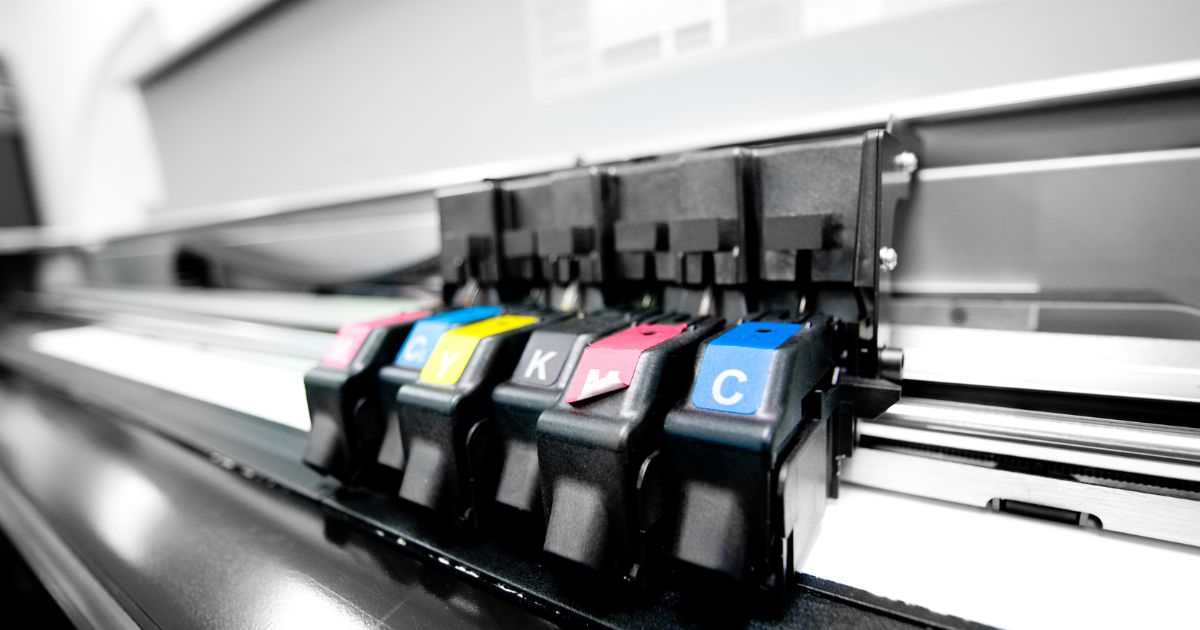
At the storefront level, PostNet emphasizes a wide menu of services—often including custom graphic design, print products (business cards, brochures, signage, direct mail), packaging, and multi-carrier shipping. That “menu breadth” is a real differentiator because it can create multiple reasons for a local business customer to return.
PostNet explicitly describes serving both B2B and B2C needs. Many centers cultivate repeat small-business relationships (ongoing print/marketing projects) while also supporting consumers (shipping, personal printing projects, mailbox-related services).
Operationally, PostNet also highlights partnerships as a core enabling feature. The brand argues that franchisees do not need to be “printing experts,” because the system is designed to make a broad offering accessible via tools, training, and vendor relationships—rather than requiring an owner to master every technical workflow from scratch.
Support is typically described as front-loaded and ongoing. A commonly cited training structure includes classroom training, hands-on training in an existing center, on-site soft-opening support, and follow-up support after opening—plus ongoing field support and tools.
PostNet also frames the owner experience as community-oriented and relationship-driven—ideal for someone who enjoys helping local entrepreneurs solve real business problems (marketing, logistics, deadlines, and quality presentation). If a buyer wants a business where “being visible” in the community is a feature—not a burden—this can be a good fit.
Startup Costs and Ongoing Fees
PostNet publicly shares a detailed investment snapshot and qualifications on its franchise site. The brand lists a franchise fee of $39,950, a center development/build-out package of $131,000, and an initial marketing fee of $10,000, with a total investment shown in the mid–two-hundreds (published ranges include $223,207 to $297,000 on the same page, and also references to $223,207 to $289,807). The site notes that fees may vary and directs candidates to the FDD for the authoritative, current breakdown.
PostNet also lists minimum financial qualifications (for the published snapshot) including $60,000 liquid capital and a $350,000 net worth.
Independent sources that summarize PostNet’s 2025 FDD commonly show a similar total estimated initial investment range around $230,200 to $296,800, including line items such as lease-related expenses, insurance, training expenses, and initial working capital. The same summary also lists ongoing fees such as a 5% royalty and a 2% national advertising fund contribution, plus additional advertising expectations (including an advertising cooperative and minimum local ad spend frameworks).
One operational reality that can catch first-time owners off guard is the “brick-and-mortar math.” PostNet centers are typically around 1,000 to 1,200 square feet (with smaller and larger examples), and the company notes that opening can take roughly 90 to 180 days after a franchise is awarded—often driven by real estate timelines. That’s normal for retail, but it’s very different from home-based or contract-based service models.
On the performance side, PostNet itself is explicit that federal and state rules restrict its ability to provide profit projections outside the FDD, and encourages candidate due diligence via the FDD and franchisee conversations.
That said, there are a few publicly available performance signals worth noting:
PostNet reported (system-wide) $74 million in gross sales in 2024 and announced awarding 36 franchise agreements that year (30 to new franchisees and six to existing owners adding units).
In a separate release, PostNet stated it saw a 10.3% increase in same-store sales from 2019 to 2021 and added 29 new franchises in 2021.
For unit-level revenue, a BizBuySell franchise profile lists average unit revenue of $372,226 “in 2024” along with system unit counts shown on that profile. As always, candidates should validate any third-party profile against the current FDD and conversations with existing owners.
Some third-party FDD-based articles also cite average annual unit revenue in the low-to-mid $300K range and note that top-performing stores can be significantly higher; for example, one summary references an upper-ten-percent group averaging $844,356 in annual sales (reported as Item 19 data). These distributions matter: averages can hide wide variation, and “top ten percent” is not a promise of typical results.
How the Industry Itself Compares
PostNet Franchise Industry Advantages
The biggest advantage of the print/ship business-center model is diversification of demand sources. Even if one category softens (say, certain print products), shipping demand can remain strong—especially as parcel volumes continue to be massive in the US. ShipMatrix, for example, reported US parcel volumes reaching 23.8 billion in 2024 and the US parcel market reaching $188 billion in 2024. That doesn’t automatically translate into profits for a retail shipping storefront, but it does show that “shipping activity” is not a small or declining behavior in the US economy.
A second advantage is the “clean retail” environment. PostNet itself emphasizes that it’s hands-on work without “getting your hands dirty,” which can appeal to corporate professionals who want ownership but prefer a storefront setting over physical field work.
Third, PostNet centers often lean into relationship-based repeat B2B work. When a local business finds a reliable partner for print deadlines, signage, direct mail, and shipping, that relationship can become sticky. PostNet’s own materials stress becoming a “go-to partner” for small business owners.
Finally, there’s a lifestyle angle that many career changers find compelling: PostNet notes typical operating hours (often around 8:30–9:30 a.m. open and 6:30–7:30 p.m. close, with shorter Saturdays and closed Sundays), which can feel more predictable than on-call, emergency, or late-night service models.
Compared to Commercial Cleaning Industry
To compare fairly, you have to separate “industry demand” from “owner economics.”
The print and shipping ecosystem is large—but the printing side of the equation has meaningful headwinds. IBISWorld reports that US printing industry revenue declined across recent years (noting a five-year CAGR decline and continued projected decline in market size), tying much of the pressure to the rise of digital media and shifts away from traditional print channels.
That doesn’t mean a diversified print business can’t do well—many successful operators focus on higher-value niches (signage, packaging-related printing, direct mail integration, or business branding projects). But it does mean a prospective PostNet owner should evaluate local demand drivers and customer mix carefully, rather than assuming “printing is printing.”
Shipping has its own “buyer beware” elements. Parcel demand is huge, but competition is intense and constantly evolving. ShipMatrix highlights how private networks (and fast-growing alternative carriers) have been reshaping the addressable market dynamics for traditional carriers—an indicator that parcel logistics is strategic, volatile, and highly competitive. 17
Now compare that to commercial cleaning.
Commercial cleaning sits inside a US janitorial services industry measured in the hundreds of billions. IBISWorld estimates US janitorial services revenue at $112.0 billion in 2026, and notes that commercial cleaning services account for over 80% of revenue—because offices, retailers, and hospitals require regular, thorough cleaning.
From a stability standpoint, that “regular, thorough cleaning” requirement is the core point: buildings need cleaning in good times and bad because it’s a baseline operating requirement, not a discretionary luxury. Even when budgets tighten, facilities typically rebid contracts, adjust scope, or negotiate—yet the need itself doesn’t vanish.
From a growth standpoint, the customer base is broad and diversified: commercial, healthcare, educational, and industrial demand segments all contribute to market expansion. That mix helps reduce reliance on one consumer trend or one product category.
The biggest business-model difference, though, is recurring revenue.
Retail service centers often earn revenue transaction-by-transaction: a shipping label today, a print job this week, a mailbox rental that may or may not renew. Commercial cleaning, when built properly, tends to be contract-based: long-term B2B agreements that produce predictable monthly cash flow. Business valuation and M&A perspectives frequently recognize that a healthy book of recurring service contracts reduces volatility and can improve business value because revenue is more predictable.
Operationally, commercial cleaning can also scale without a retail lease footprint. A PostNet-style model is tied to storefront economics: lease, build-out, retail hours, and staffing customer-facing shifts. PostNet itself describes the real estate process and typical center size, and notes that opening can be driven by real estate timelines.
Commercial cleaning, by contrast, can often scale through adding crews and contracts rather than expanding square footage. That doesn’t make it “effortless,” but it usually avoids the step-function costs of a second retail location.
For corporate escapees who want executive ownership, this is where the “Cleaning Business Franchise” category can be particularly attractive: it’s a large US market, it’s recurring by nature when structured around contracts, and it’s compatible with building a team-based operation rather than being the person behind the counter every day.
How they Compare
Simpler Systems, Bigger Potential
If your goal is to leave a demanding career and buy a business that can ultimately be run at a leadership level, friction matters. The more moving parts a model requires (retail scheduling, walk-in traffic variability, equipment maintenance, front-counter staffing), the more likely the owner gets pulled back into “operator mode.”
15 is positioned inside the commercial cleaning category—an industry Assett describes as a very large market with broad demand from commercial facilities. Assett also describes its model as designed for owners who want to work on the business and pursue scalable recurring revenue, rather than doing the cleaning themselves. These are brand claims, so the right next step for any buyer is to validate them via the FDD and franchisee conversations.
Assett further positions itself as suitable for first-time entrepreneurs by providing a business “playbook” and systems so owners do not need prior industry experience. Again, that’s a franchisor positioning statement—but it’s aligned with why many corporate professionals pursue franchising in the first place: you’re buying a system, not inventing one.
If your end goal is building a large, contract-based commercial book of business (rather than a retail storefront dependent on daily transactions), commercial cleaning is generally structured to support that outcome—especially as you add crews and extend contract coverage across more facilities.
Automated Hiring = Time and Money Saved
In almost every service business, staffing becomes the constraint. This is where Assett emphasizes a differentiator: a “proprietary automated hiring system” intended to keep a pipeline of candidates flowing, reduce no-shows, and cut down the owner’s time spent recruiting.
Assett explicitly claims this automated hiring approach can save owners “20–30 hours a week” otherwise spent on hiring tasks. That’s a significant claim, and it’s one that a serious buyer should validate in discovery by asking: what exactly is automated, what still requires human oversight, what costs are involved, and what happens in tighter labor markets?
The key strategic implication is straightforward: if hiring is systematized earlier, it becomes easier to scale crews, protect service quality, and keep focusing leadership energy on winning contracts and retaining clients—rather than constantly refilling the labor pipeline.
Personalized and Founder-Led
Ownership structure matters more than most buyers realize. Some franchises are owned by large PE-backed platforms; others remain founder-led or family-owned, as stated in bizbuysell.com.
Assett presents itself as founder-led and family-operated. Its site identifies the founder and CEO as and emphasizes hands-on access to leadership and guidance as part of the experience.
For some franchisees, that can translate to faster decisions, tighter feedback loops, and a more personal relationship with leadership—especially early in a franchise system’s growth. Whether that is a benefit or a drawback depends on the candidate: some prefer the “big institution” structure; others prefer direct access and a smaller, founder-led environment.
If your prospect cares about being treated as a partner—not a number—this becomes a meaningful criteria to weigh alongside the usual line items like fees and investment range.
Final Thoughts
The PostNet Franchise opportunity can be attractive for the right operator. It offers a wide menu of services, a customer-facing retail environment, and a business that can feel tangible and community-centered. PostNet also reports meaningful system momentum (including reported network-wide gross sales and franchise agreement awards in 2024), and it emphasizes training, partnerships, and support designed to help owners ramp up even without prior print/shipping experience.
But it’s equally important to match the model to the buyer’s goals.
If your ideal prospect’s definition of success is long-term stability, simplicity, recurring revenue, and executive-style ownership, commercial cleaning tends to align better with those priorities. The US janitorial services market is massive, demand is broad across business and institutional segments, and contract-based recurring revenue can create a more predictable growth path than a transaction-driven storefront model.
Retail storefront franchises (including print/ship models) can absolutely succeed—but they often come with operational realities: a physical location, a daily service counter, and staffing coverage during business hours. Commercial cleaning more naturally supports team-based delivery and scalable contracts, which is why many career changers view it as a more stable foundation for building substantial recurring revenue.
“If you’re exploring franchise opportunities and want a model that can deliver long-term income, flexibility, and control — we’d love to show you how Assett Franchise can help you build a business that works for your life. Visit https://assettfranchise.com to connect with our team and learn more.”